Repair or Replace Your Garage Door? An Honest Comparison
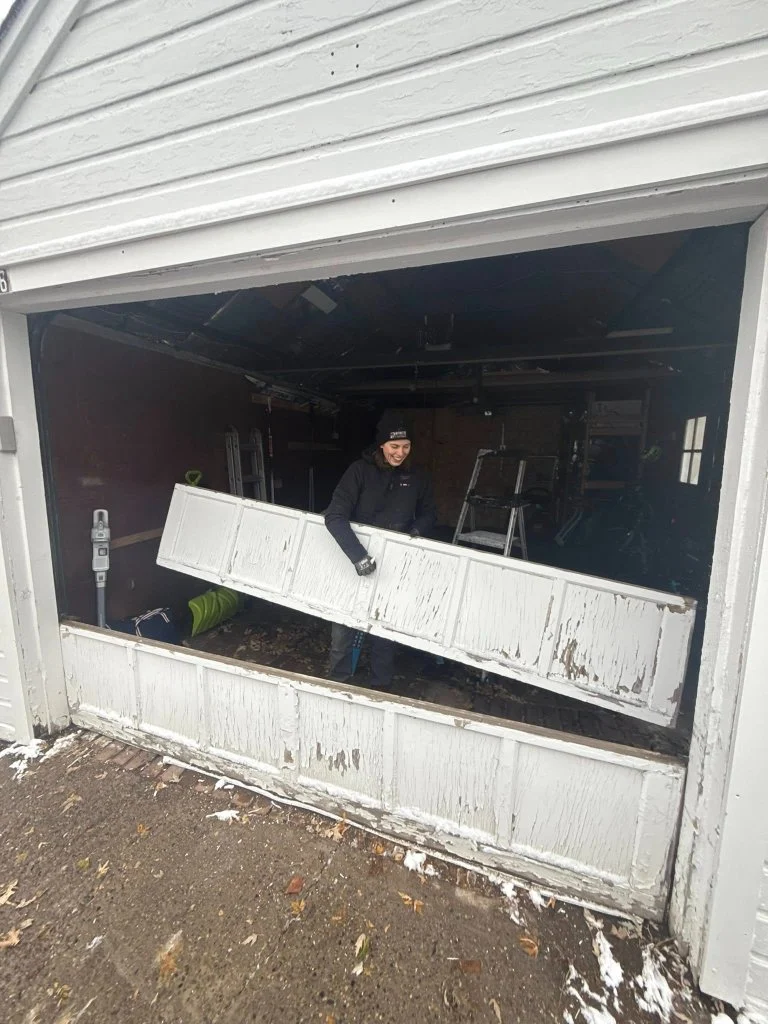
If your garage door just failed, repair is almost always the right first move. A broken spring, a snapped cable, or a failed opener is a single component failing, not a door failing, and single components cost far less to replace than an entire door. Replacement makes sense when failures have become a pattern, when the door has widespread panel damage, or when the repair estimate runs close to what a new installation would cost. The sections below give you the specific signals for each.
The 50% threshold
The most useful rule of thumb: when a repair estimate exceeds roughly half the cost of a comparable new door installed, the financial case for repair starts to weaken. At that level of spend, you are putting a significant share of replacement value into a door that is still aging. You will likely be back in a few years for the next thing.
One adjustment worth keeping in mind: a 10-year-old door with a single broken spring is worth repairing even if the spring job costs 60 or 70 percent of what a basic new door would run, because the rest of that door has years of useful life left. The 50% threshold is most useful when the door is already showing its age across multiple areas. When the door is fundamentally sound, repair wins the math almost every time.
Repairs that almost always make sense
Most garage door failures are single-component failures, and most are fixable. The four most common:
- Spring replacement. A standard torsion spring is rated for around 10,000 cycles. At two uses per day that is roughly 13 years of service. When the spring breaks, the door is heavy and stuck, but the rest of the door is typically fine. A spring that snaps in a Minnesota cold snap is a spring doing what springs do at the end of their rated life, not a sign the door is giving out. Spring repair is one of the most common calls Pronto handles, and the door is usually back in service within a couple of hours.
- Cable repair. The lift cables run from the bottom brackets up to drums on the torsion bar shaft. A cable that snaps or jumps its drum leaves the door crooked or stuck, but the door itself is undamaged. Cable repair is a single-component fix, and a good technician will also check the drums and springs at the same time since they share the load.
- Single panel replacement. One dented or cracked section does not ruin a sectional door. Panel replacement is worth considering when the damage is limited to one or two sections and the replacement panel is still available. The catch: on a door that is 15 to 20 years old, the manufacturer may no longer produce that section, which can change the decision.
- Opener failure. The opener and the door are separate systems. An opener that wears out after 12 to 15 years says nothing about the condition of the door itself. Opener repair or replacement is its own call, and the door's age should not push you toward a full replacement just because the motor gave out.
Signs that replacement makes more sense
Repair loses the argument in a few specific situations:
- Three or more damaged panels. Replacing several sections starts to approach the cost of a new door, and you end up with a door that is part old and part new. New sections rarely match the faded color of the original panels. At some point it is simpler and cheaper to start fresh.
- A pattern of different failures. If you replaced the spring two years ago, a cable last year, and now a roller is cracked, you are watching the hardware age out across the board. The individual repairs may each look reasonable. Together they tell a different story.
- A door over 20 years old with worn hardware throughout. Check the rollers: if the nylon is worn down to the steel core, the hinges are starting to crack, and the weatherstripping has hardened, the whole door is near the end of its service life. Fixing one part leaves the rest in the same condition.
- Structural wood rot. Wood doors and wood-framed doors are common in older Minneapolis neighborhoods where the detached alley garage predates the suburb era. If the bottom rail of a wood door has soaked up moisture and started to rot, the structural integrity of the door is compromised. Patching rot slows it; it does not stop it.
Minnesota factors that change the calculation
A few things specific to this climate worth knowing:
Detached alley garages in Minneapolis and St. Paul often date from the 1920s to the 1960s. Many were built with wood doors, and some have since been fitted with single-layer steel doors on wood-framed jambs. When the wood framing is sound, these garages can run for years with straightforward maintenance. When the wood has started to go, especially at the bottom of the jamb or along the threshold, moisture will undermine any door you put on it until the frame is addressed first.
Salt, slush, and the bottom panel. Road salt splashes up from the driveway apron and sits against the lowest section of the door through freeze-thaw cycles. Surface rust on the outside face of the bottom panel is cosmetic and can be sanded and painted. Rust that has pitted through the steel or that is traveling up to the second section is a structural issue. A door in that condition will look worse each winter.
Cold snaps and springs. Minnesota generates a steady run of spring failure calls in January and February. Metal fatigue accelerates in extreme cold, and a spring near the end of its rated life is more likely to let go on a 20-below morning. A spring break is almost never a reason to replace the door. It is a reason to replace the spring, and often the companion spring on the other side at the same time, since they are the same age and the same number of cycles in.
Three things to check before you decide
You can do these yourself before calling anyone:
- Disconnect the opener by pulling the red emergency cord and try to lift the door manually with it fully closed. A door with intact springs should lift smoothly and stay in place when raised halfway. If it is very heavy or drops back down, the springs are weak or broken.
- Look at the bottom two sections from outside. Surface scratches and small dents are cosmetic. Steel that is bubbled, pitted, or showing rust bleeding through from the inside has started to fail structurally. Also check the bottom seal: flexible and flat is fine. Cracked and hard means it has been leaking air and water for a while.
- Check the rollers from inside the garage while the door is closed. Nylon rollers should still have a full rim around the wheel. If the nylon is worn flat to the steel core on most of the rollers, the hardware is at the end of its life whether or not the door itself needs replacing.
For cost ranges on common repairs and full replacements in the Twin Cities, the garage door repair cost guide covers what each job typically runs and what moves the number up or down.
The repair or replace decision framework
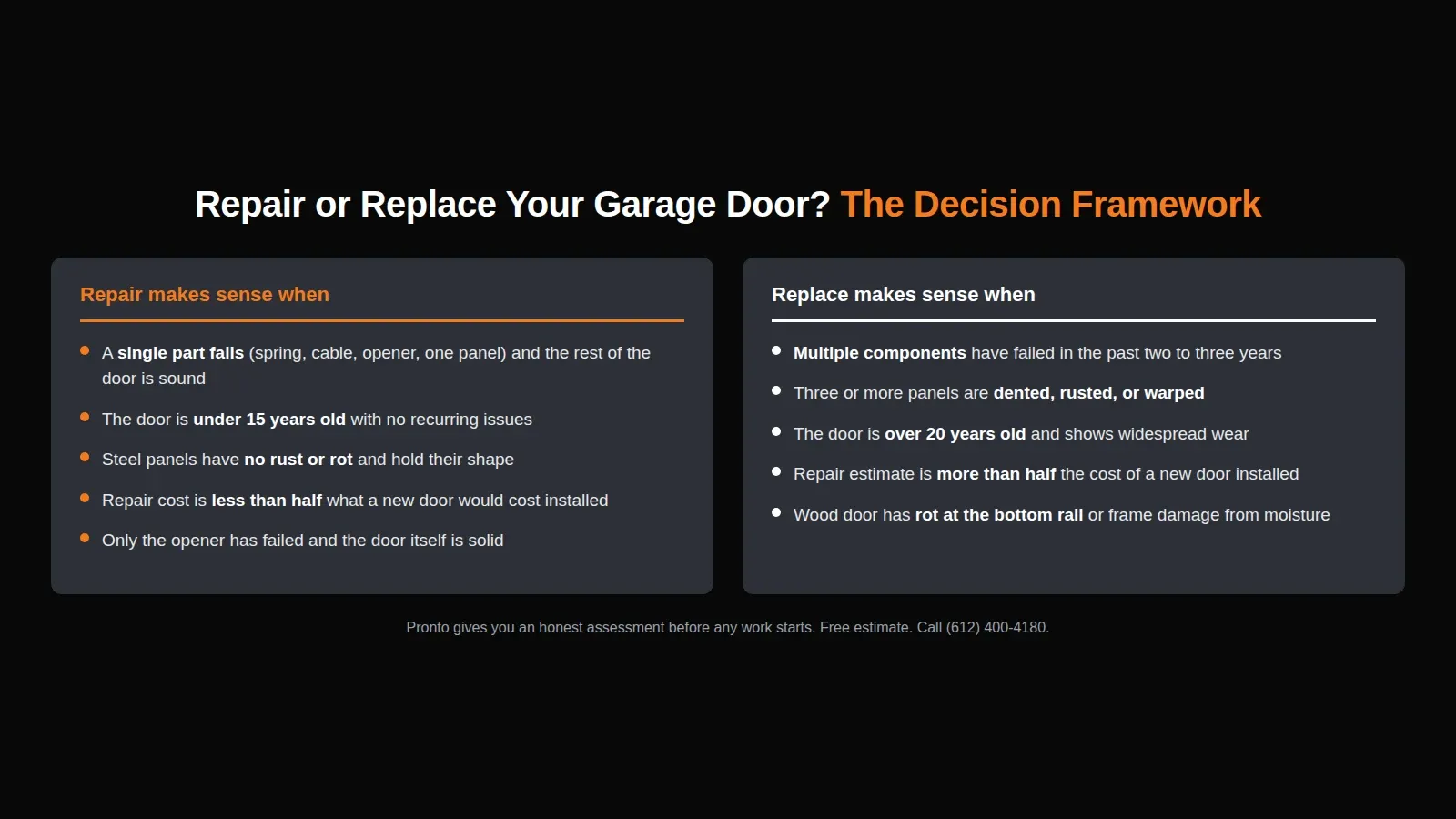
The framework covers most situations. When you are on the border, the most useful question is: how old is this door and has it needed repairs before? A seven-year-old door with one broken spring is a repair. A 22-year-old door that has already had springs, cables, and panel work is most likely a replacement.
Pronto gives you a straight read before any work starts. We will tell you what the repair involves, what a comparable new door would cost installed, and what we actually think the door has left in it. No pressure either way. Pronto serves Minneapolis, St. Paul and the surrounding Twin Cities suburbs seven days a week.
Repair or Replace Your Garage Door: Common Questions
Is it cheaper to repair or replace a garage door?
In most cases, repair is significantly cheaper. A spring or cable repair typically runs a fraction of what a new door costs installed. Replacement starts to make financial sense when repair estimates approach 50 percent of the cost of a new door, when three or more panels need work, or when the door has had several different repairs over the past few years.
How many repairs before I should replace the garage door?
There is no fixed number, but a pattern of different failures across two to three years is a meaningful signal. One spring replacement is a normal maintenance event. A spring, then a cable, then a track problem over three years suggests the hardware is aging out broadly, not just one unlucky part.
Can I replace just one or two panels instead of the whole door?
Yes, on most sectional doors a single section can be replaced without replacing the whole door, as long as the matching panel is still available from the manufacturer. On doors that are 15 or more years old, discontinued sections are a real possibility. A technician can confirm availability before any work starts.
How long should a garage door last?
A quality sectional steel door typically lasts 20 to 30 years with regular maintenance. The hardware, particularly the springs and cables, will need attention before the door itself wears out. For a detailed breakdown of what to expect from each component, see the post on how long a garage door lasts.
Does homeowners insurance cover garage door damage?
It depends on the cause. Damage from a covered peril like a fallen tree, a windstorm, or a vehicle impact is typically covered under a standard homeowners policy, subject to your deductible. Wear and tear, mechanical failure, and age-related damage are generally not covered. Check your policy or call your agent with the specific cause before deciding how to proceed.
Not Sure Which Way to Go?
Pronto gives you a straight answer before any work starts. Call (612) 400-4180 or request a free estimate online. Same-day service available seven days a week.