How Long Does a Garage Door Last? Door, Springs, and Opener
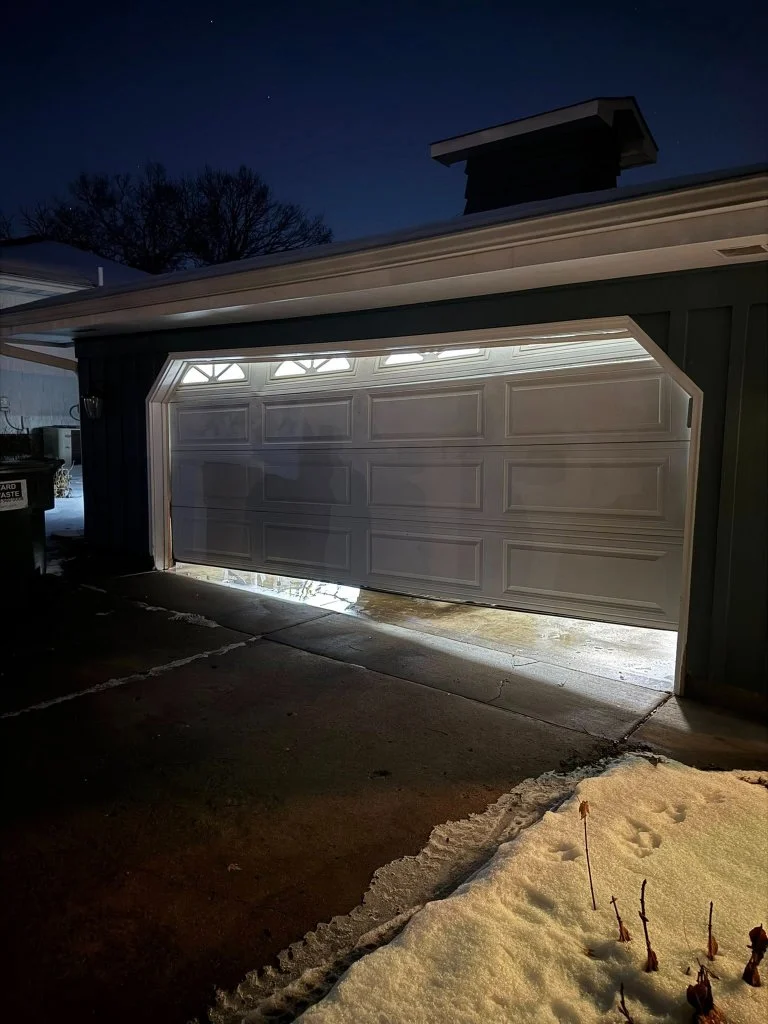
A garage door's panels typically last 15 to 30 years. The springs, which do the actual lifting, are rated for around 10,000 cycles and usually need replacement every 7 to 10 years. The opener falls in between, at 10 to 15 years. In Minnesota, extreme cold puts extra stress on springs and cables with every cycle, so the lower end of those ranges is more common here than the higher one.
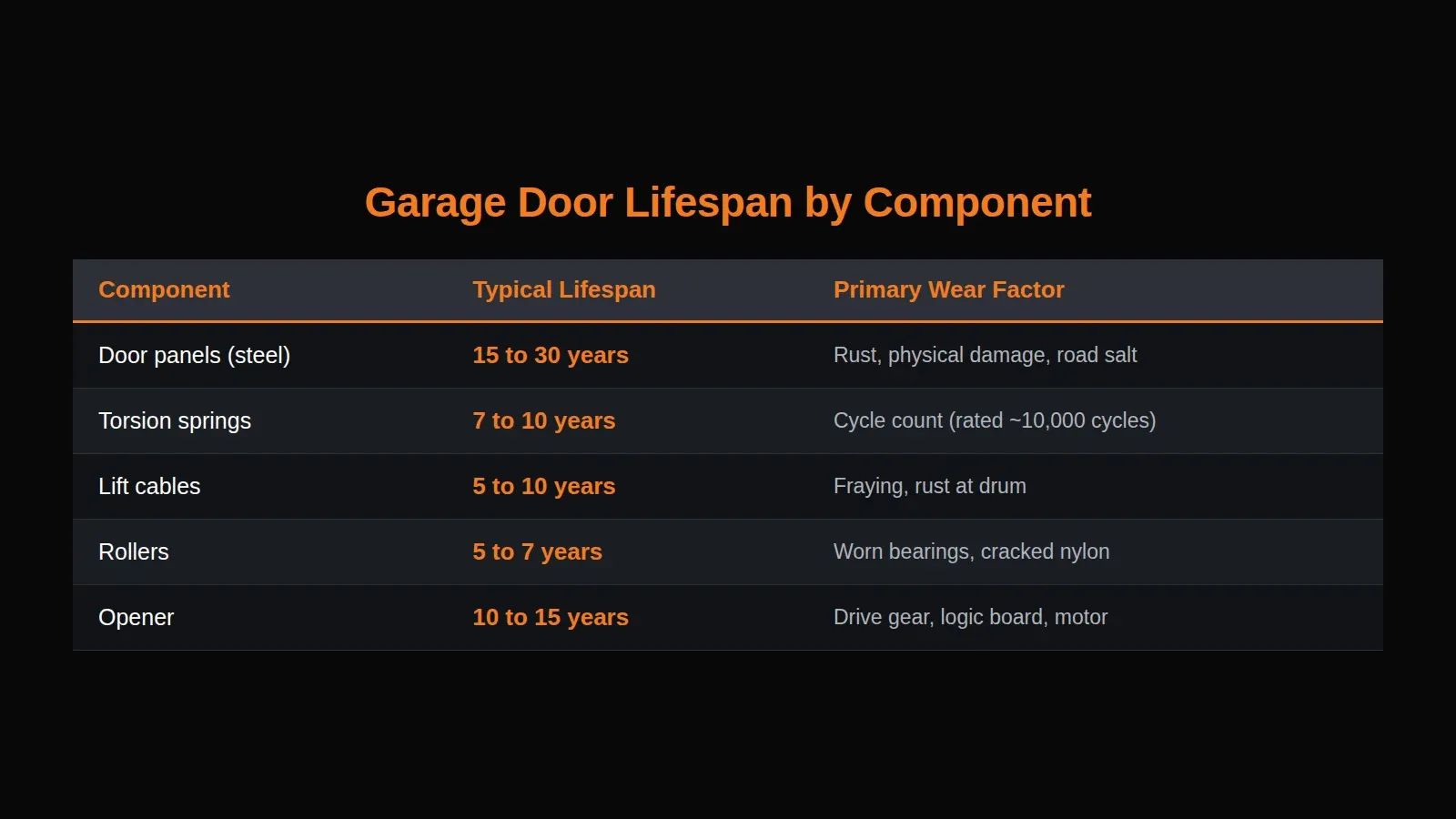
Lifespan by component at a glance
The garage door system has five main parts that wear at different rates. Understanding each one separately helps you decide whether a repair is a quick fix or a sign that something bigger is coming.
| Component | Typical Lifespan | Primary Wear Factor |
|---|---|---|
| Door panels (steel) | 15 to 30 years | Rust, physical damage, road salt splash |
| Torsion springs | 7 to 10 years | Cycle count (rated around 10,000 cycles) |
| Lift cables | 5 to 10 years | Fraying, rust at the drum |
| Rollers | 5 to 7 years | Worn bearings or cracked nylon |
| Opener | 10 to 15 years | Drive gear, logic board, motor |
How long do the door panels last?
Steel garage door panels typically last 15 to 30 years in the Twin Cities. Cold weather alone does not shorten panel life significantly, but road salt splash and the freeze-thaw cycle at the base of the door do. Salt-laden slush clings to the bottom sections, works into any paint chip, and starts the rust process from there. Once rust gets behind the steel skin, the section blisters from the inside and cannot be repainted back to usable condition.
Wood doors on older Minneapolis and St. Paul homes can look good for decades, but need annual painting or sealing to stay tight. A door neglected for several years may warp enough that no track adjustment will close it evenly.
If only one or two panels are damaged, panel replacement is often cost-effective. If three or more sections are compromised, a new door usually comes out ahead on both cost and appearance.
Springs wear out on cycles, not a calendar
Springs do not fail on a schedule. They fail when they run out of cycles. A standard torsion spring is rated at around 10,000 open-and-close cycles. What that means in practice depends entirely on how often your door moves.
A household that uses the garage as a main entrance might run 6 cycles a day, hitting 10,000 cycles in under 5 years. A detached city garage used mostly for storage might see 2 cycles a day and reach 13 years or more.
| Daily Cycles | Years to 10,000 Cycles |
|---|---|
| 2 cycles per day | 13.7 years |
| 3 cycles per day | 9.1 years |
| 4 cycles per day | 6.8 years |
| 6 cycles per day | 4.6 years |
Cold weather adds another variable. Metal is less flexible at very low temperatures, and a spring cycling at minus 10 or minus 20 degrees Fahrenheit takes on more stress per cycle than the same spring cycling in mild weather. Pronto gets more spring calls in January and February than in any other month, not because springs are necessarily older then, but because cold makes each cycle a harder test on the metal.
Torsion springs hold enough stored energy to cause serious injuries when they fail under load. Never try to adjust, unwind, or replace one yourself. Our spring repair service covers what the job involves and what the turnaround looks like. On a two-spring door, replacing both at the same time is usually the better call, because the second spring is the same age and often fails within a few months of the first.
How long does a garage door opener last?
An opener typically lasts 10 to 15 years with regular use. The drive type affects it a little: chain-drive openers are the most common, and their most frequent mechanical failure is a worn plastic drive gear, which lets the motor run without moving the door. Belt-drive and direct-drive openers have fewer moving parts and often run quieter longer, though they cost more upfront.
Openers made before 2014 predate the current UL 325 safety standards for auto-reverse and obstruction detection. A very old opener is not just inconvenient when it fails. If the reversal on contact is sluggish or inconsistent, it is a safety issue worth addressing before something is damaged or someone is hurt.
In extreme cold, lubricant thickens and a poorly balanced door puts extra stress on the motor with every cycle. Keeping the door balanced and lubricated reduces that load. Our opener repair team covers all major brands and will tell you honestly when an older unit is worth fixing instead of replacing.
What shortens a garage door's life in Minnesota
A few Minnesota-specific factors go beyond what most guides cover:
- Road salt splash onto the bottom two panels. Washing the door each spring with plain water removes the salt before it has a full season to work. Waxing the steel panels once a year makes salt and slush less likely to stick.
- Ice at the threshold. Water pools at the base, freezes overnight, and bonds the rubber seal to the concrete. Forcing the opener against a frozen seal can tear the seal or strip the opener gear. Our post on Minnesota winter garage door problems covers how to handle it safely without damaging anything.
- Condensation inside steel panels. When a cold garage warms suddenly or the sun heats the outer skin, moisture can form on the interior steel surface. Over time that rust works from the inside out, which is harder to catch early.
- Neglected lubrication. Lubricating the springs, hinges, rollers, and tracks once a year with a silicone or lithium-based spray adds years to the moving parts. Avoid WD-40, which evaporates quickly and leaves no lasting protection.
A safety inspection and tune-up each fall addresses all of this in one visit: spring tension, balance check, lubrication, cable and roller condition, and the seal. Catching a spring near the end of its cycle life in October costs one service call. Catching it when it snaps on a cold January morning is more expensive and more urgent.
Signs it is time to replace rather than repair
Repair makes sense when one part fails and the rest of the system is sound. Replacement is the better call when:
- Panels are rusted through or visibly warped, and the cost of a complete panel replacement would approach the price of a new door.
- Springs have failed twice within three years. Once a spring has run through its cycle count, further repairs buy only a short window before it fails again.
- The opener is 15 or more years old, lacks reliable auto-reverse, and a repair estimate is approaching the cost of a new unit.
- The door is consistently loud, slow, or out of balance despite repeated adjustments, and the opener keeps tripping on its travel limits.
For a sense of what each repair or replacement actually costs in the Twin Cities before you commit, our garage door repair cost guide has typical price ranges for springs, openers, panels, and cables.
When to call Pronto
Pronto covers Minneapolis and St. Paul and the surrounding suburbs seven days a week. Same-day appointments are usually available. You get an upfront flat-rate price before any work starts, and we carry springs, cables, rollers, and opener parts on the truck so most repairs are done in one visit. Call or text (612) 400-4180 or request a free estimate online.
Garage Door Lifespan: Common Questions
How many cycles does a standard garage door spring last?
Around 10,000 cycles for a standard torsion spring. At 4 cycles per day, that works out to roughly 6.8 years. Higher-cycle springs rated at 20,000 or 50,000 cycles are available and cost more upfront, but make sense for a busy household or a garage used as a main entrance many times a day.
Does cold weather shorten how long garage door springs last?
Cold does not add cycles, but metal under stress at very low temperatures fatigues faster per cycle than the same spring at moderate temperatures. That is why we see more spring failures in January and February in the Twin Cities. Keeping the springs lubricated and the door in good balance reduces the extra strain that cold puts on each cycle.
Is it worth repairing a 15-year-old garage door opener?
Usually not. Openers older than 15 years often predate current UL 325 safety standards for auto-reverse, parts become harder to source, and the repair cost often approaches the price of a new unit. A new opener also runs more quietly and is ready for smartphone control if that matters to you.
How do I know when a tune-up is no longer enough?
A tune-up covers lubrication, balance, and safety checks, and makes sense when the door is structurally sound but noisy or slow. When panels are rusted through, springs have broken more than once in a few years, or the opener fails repeatedly, those are signs that the underlying component is past its service life rather than just due for maintenance.
How often should a garage door be serviced in Minnesota?
Once a year at minimum, and fall is the best time. A pre-winter inspection lets a technician check spring tension, cable condition, and the bottom seal before ice and heavy use begin. A spring that is near the end of its cycle life is much easier to deal with in October than when it snaps on a sub-zero morning.
Not sure how much life your door has left?
Call (612) 400-4180 or request a free quote. Pronto serves Minneapolis, St. Paul and the Twin Cities suburbs seven days a week, with same-day service usually available.