Garage Door Won't Close: The Safety-Sensor Checklist
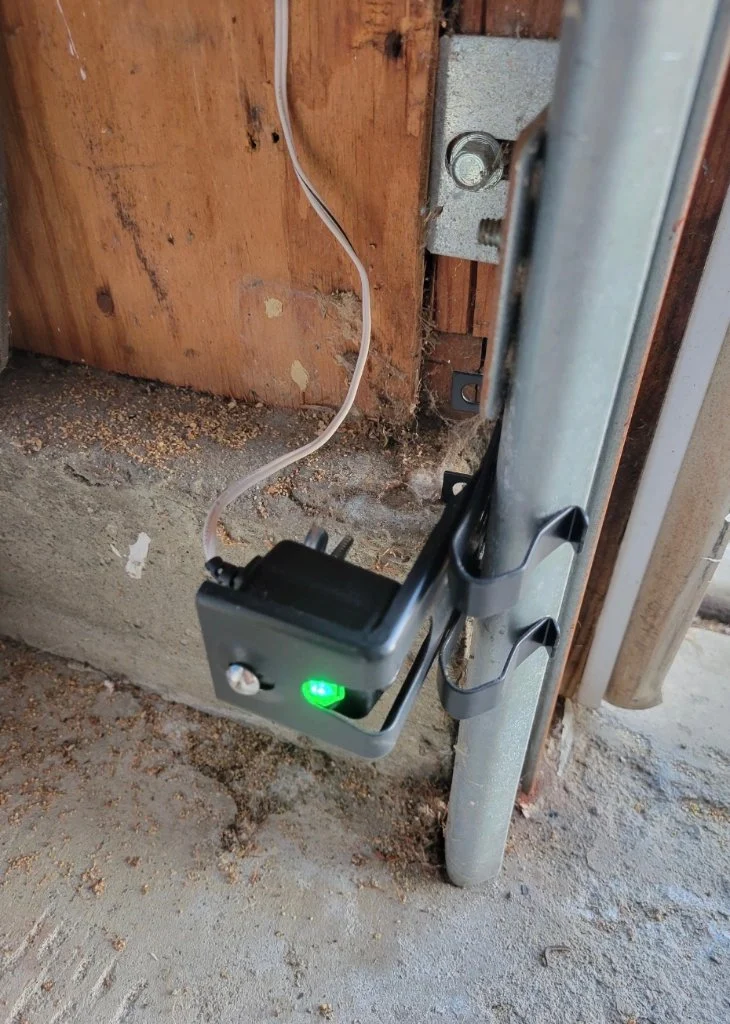
If your garage door won't close, the safety sensors are the most common reason. Every opener built since 1993 has two sensors mounted 4 to 6 inches off the floor, one on each side of the door. When the beam between them is blocked, dirty, or knocked out of alignment, the opener refuses to send the door down as a safety precaution. In most cases you can clear the problem in five minutes without tools. The checks below run from the fastest to the ones that need a technician.
What is the door doing when you press the button?
| What you see | Most likely cause | Safe to fix yourself? |
|---|---|---|
| Motor runs but door won't move at all | Sensor fault or emergency release disengaged | Yes for sensors, yes for release |
| Door starts down, then immediately reverses | Beam interrupted or sensor misaligned | Yes |
| Door closes partway, then reverses before the floor | Close-limit set too low or down-force too sensitive | Yes with manual adjustment |
| Wall button works, remote or keypad doesn't | Opener in lock or vacation mode | Yes |
| No movement, no sound, no light | Power problem or opener failure | Check power first; opener failure needs a tech |
How the sensors work
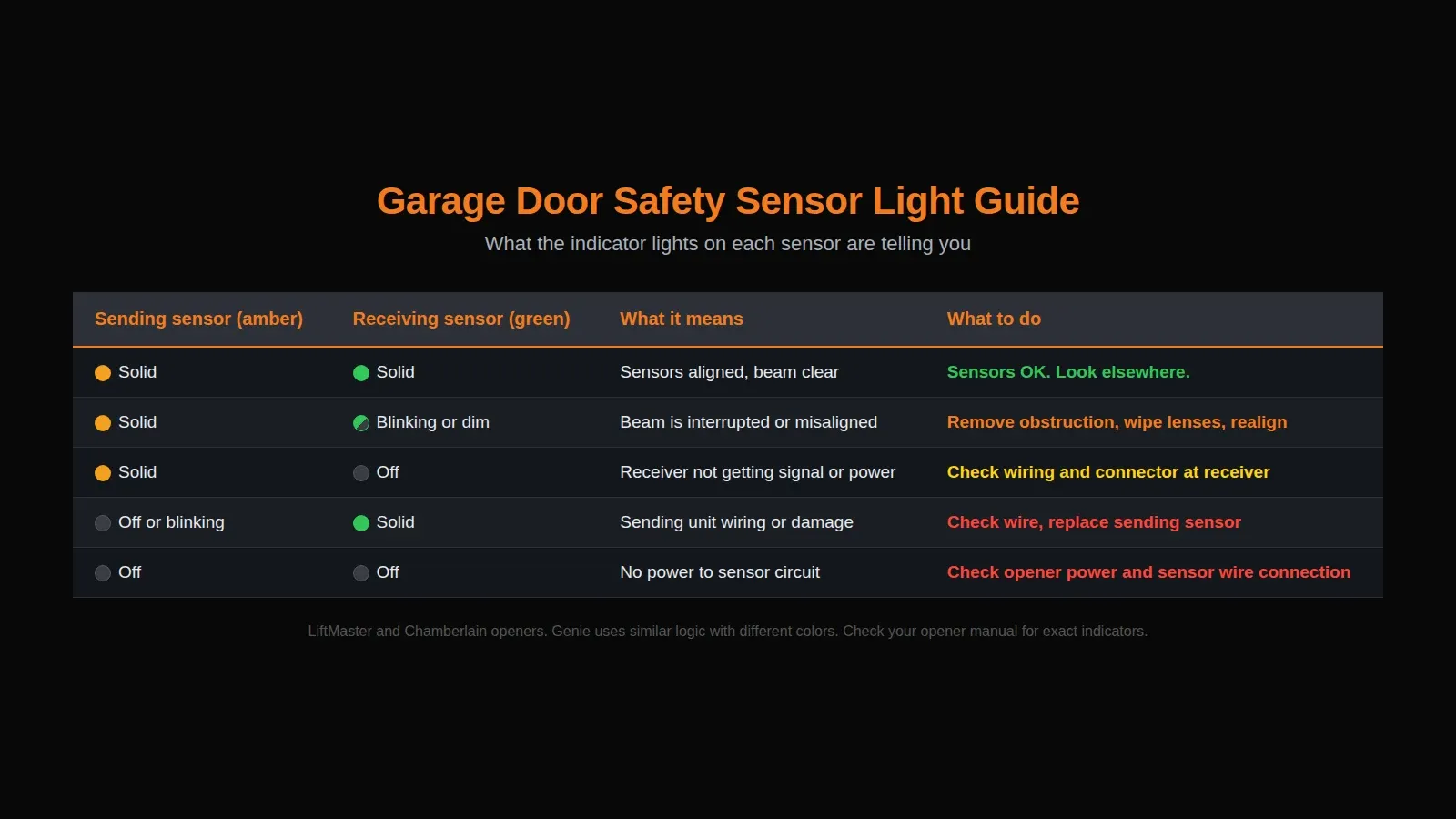
The sending sensor (amber light on LiftMaster and Chamberlain openers) aims an infrared beam across the floor to the receiving sensor (green light) on the other side. As long as the beam is unbroken and the lenses are clear, the opener closes the door normally. When something interrupts the beam, the receiving sensor's light blinks, dims, or goes off. That blinking light is your most reliable clue.
Step 1: Clear the path
Walk both sides of the door before anything else. A garden tool, a bag of salt, a coiled hose, or a piece of cardboard leaning against the track is enough to break the beam. Look low: the sensors sit only 4 to 6 inches off the floor, so small objects are easy to miss. Also check above the sensors. In Minnesota garages, spiderwebs spanning from a sensor bracket to the track wall can interrupt the beam, especially in warmer months.
Step 2: Clean the lenses
Even a thin film of dust or grime blocks enough infrared light to cause a fault. Wipe both lenses with a dry soft cloth. In Minnesota winters, road grit and dried slush near the threshold settle on the lens faces over time. Do not use ammonia-based glass cleaner; it can fog the plastic over repeated use. Clean both lenses even if only one light is misbehaving.
Step 3: Realign the sensors
Each sensor is on a bracket held by a wing nut or a small bolt. Over time, a bump from a bicycle, a car door, or a pushed broom loosens it and points the sensor off-axis. To realign: loosen the fastener just enough that the bracket can swivel, aim the sensor directly across at its partner, watch the receiving sensor light until it goes solid, then tighten the fastener while holding the sensor in place.
On LiftMaster and Chamberlain, the target is solid amber on the sending sensor and solid green on the receiving sensor. Genie openers use different LED pairings; check the manual.
Step 4: Check the sensor wiring
If the lenses are clean and the sensors are aimed correctly but the receiving light is still off or blinking, check the wires. Each sensor has a thin wire running up the track to the opener motor unit. A wire that is pinched by a roller, chewed by a rodent, or pulled loose at the connector on the sensor body breaks the circuit even when the lens is spotless. Push the connector at the sensor firmly into the housing to reseat it. If the wire looks kinked, frayed, or cut anywhere along its run, that needs a replacement.
Sensor wiring takes a beating from foot traffic and ice scrapers at floor level. Pronto's safety sensor service covers sensors and the wiring harness.
When sensors are fine but the door still won't close
If both sensor lights are solid and the door still refuses to close, the problem is somewhere else. Work through these:
- Wall button works but remote or keypad doesn't. The opener is in vacation or lock mode. Look for a lock icon on the wall console and hold the lock button for a couple of seconds to clear it. This is also covered in our guide on why a garage door won't open.
- Door starts down and reverses before reaching the floor. The close-limit switch is set too low. The dial or button is on the side of the opener housing. Turn it in small increments toward less travel and test after each change.
- Door closes almost all the way and then reverses with a thump. The down-force setting is reading the floor seal as a hazard. Increase down-force slightly in small steps, then test the safety reverse: place a 2x4 flat on the floor and close the door onto it. The door should reverse when it hits the board.
- Motor runs but door doesn't move. The emergency release cord was pulled. Pull the cord toward the door to re-engage the trolley, or run the opener and it will click back in.
A note on holding the wall button to force the door down
On most openers, pressing and holding the wall button forces the door down even with a sensor fault active. Use it if the door is stuck open and you need to secure the garage overnight, then fix the sensor problem before returning to normal operation.
Winter factors specific to Minnesota
Two causes come up regularly in Twin Cities calls between November and March. The first is a ridge of ice or compacted slush on the threshold below one of the sensors. When meltwater refreezes overnight, it can sit right in the beam path by morning. Scrape the threshold clear and the door usually closes on the next try. The second is temperature affecting the force settings: an opener calibrated in September may read the added drag of a cold, stiff door as an obstruction by January and reverse on the way down. A small down-force increase usually resolves this, but check the sensor and threshold for ice first.
When to call a technician
Call if the sensor wiring is damaged along its run, if a sensor lens is cracked or the bracket is bent past realigning, if limit and force adjustments do not resolve the problem after careful testing, or if you cannot find the cause after checking everything above. A door that won't close is a security issue, and Pronto responds same-day across Minneapolis, St. Paul, and surrounding suburbs.
Our opener repair team carries replacement sensors for all common brands on every truck. Call or text (612) 400-4180, seven days a week. Free estimates, upfront pricing before any work starts.
Garage Door Won't Close: Common Questions
Why won't my garage door close even though the sensors are aligned?
If both sensor lights are solid and the door still won't close, sensors are not the problem. Check whether vacation or lock mode is active on the wall console, whether the close-limit setting needs adjusting, or whether the emergency release was accidentally pulled. If the opener runs but nothing moves, re-engage the trolley by pulling the release cord toward the door with the door closed.
Can I tell if a garage door sensor is bad just by looking at it?
Yes. Look at the small indicator light on each sensor. A solid amber on the sending sensor and solid green on the receiving sensor means both are working and aligned. If the green light is blinking, dim, or off, the receiving sensor is not getting the beam from the sender. A cracked or fogged lens, a bent bracket, or damaged wiring will show up as an off or blinking light on the receiver side.
Why does my garage door start to close and then reverse?
The most common cause is a sensor issue: the beam gets interrupted partway through the close cycle by an object, a dirty lens, or a sensor that shifts as the door vibrates. If sensors are clear, check the close-limit adjustment. A door that reverses with a thump right at the floor is usually a down-force setting reading the floor seal as an obstruction.
Is it safe to override the sensors and force the garage door down?
Holding the wall button inside the garage bypasses the sensor circuit and forces the door down on most openers. Use it as a temporary workaround if the door is stuck open, then fix the sensor problem.
How do I reset garage door sensors after realigning them?
No reset is needed on most openers. Once the sensors face each other and the receiving light goes solid, the opener operates normally. If it still shows a fault, unplug it for 10 seconds and plug it back in to clear any latched fault code.
Garage Door Still Won't Close?
Call or text (612) 400-4180 for same-day service. Free estimates, upfront pricing. Seven days a week across the Twin Cities.