Garage Door Won't Open? 9 Causes and What to Check First
If your garage door won't open, the cause is usually one of three things: the opener has lost power or is locked out, a spring has broken, or the door is physically stuck by ice, a lock or a track problem. Listen when you press the button. Silence points at power or the remote. A hum or a click with no movement points at a spring, a disengaged trolley or a worn opener gear. The checks below run from the easiest and safest to the ones that need a technician.
Work through them in order. Most of the first five take a minute and need no tools. The last four involve parts under heavy tension, and that is where you stop and call.
Start here: what does the door do when you press the button?
| What you notice | Most likely cause | Safe to fix yourself? |
|---|---|---|
| Nothing at all, no light, no sound | No power to the opener | Yes |
| Wall button works, remote does not | Remote battery or lock mode | Yes |
| Motor runs, door does not move | Emergency release pulled or stripped gear | Release: yes. Gear: no |
| Door lifts a few inches, then stops | Broken spring or frozen seal | Seal: yes. Spring: no |
| Loud bang earlier, door now very heavy | Broken torsion spring | No |
| Door crooked or a cable hanging loose | Snapped or unwound cable | No |
1. Is the opener getting power?
If the opener light does not come on and the motor makes no sound, check power first. Garage outlets are often on a GFCI circuit, and the reset button may be on an outlet somewhere else in the garage, or even outside. Press reset, check the breaker, and make sure the opener cord has not worked loose from the ceiling outlet. This is the most common cause of a completely silent opener, and it costs nothing to fix.
2. Is the remote dead or the opener in lock mode?
If the wall button works but the remote does not, replace the remote battery. If neither the remote nor the keypad work but the wall button does, look at the wall console. Many LiftMaster and Chamberlain consoles have a lock or vacation button that disables every remote, and it is easy to press by accident. A lock icon or a blinking light on the console usually gives it away. Hold the lock button for a couple of seconds to turn it off.
3. Is the door locked by hand?
Many older doors have a manual slide lock on the inside, a bar that shoots into the track. If someone engaged it, the opener will strain against it and the door will not move. Check both sides. Never run an opener against a locked door, because it can bend the top section or damage the opener rail.
4. Is the bottom seal frozen to the floor?
This is the classic Minnesota winter call. Meltwater runs under the door, freezes overnight, and glues the rubber seal to the concrete. The opener pulls, the door lifts an inch or stops, and the opener reverses. Do not keep pressing the button. That is how cables fray and opener gears strip. Break the seal free with a plastic scraper or a hair dryer, then clear the slush from the threshold so it does not refreeze. Avoid metal tools and do not pour hot water, which just refreezes as a thicker sheet of ice.
5. Was the emergency release cord pulled?
If the motor runs and the chain or belt moves but the door stays put, the door may be disconnected from the opener. The red emergency cord hanging from the rail releases the trolley. Someone may have pulled it, or it may have snagged on a ladder or a car roof rack. With the door fully closed, pull the cord toward the door to re-engage it, or run the opener and the trolley will usually click back into place on its own.
One warning. Only pull the release with the door closed. If a spring is broken and you release a door that is open, it can drop all at once.
6. Is a spring broken?
A broken torsion spring is the most common mechanical reason a door will not open. Springs do the lifting, not the opener. When one breaks, the door suddenly weighs its full weight, often 150 pounds or more, and the opener cannot lift it. Signs include a loud bang from the garage, a visible gap of an inch or two in the spring above the door, or a door that rises a few inches and stops.
Stop here if you see any of that. Torsion springs hold enough stored energy to cause serious injuries, and adjusting or replacing one needs winding bars and training. This is a job for professional spring repair. On a two-spring door, replacing both at once is usually the better call, because the second spring is the same age and often fails soon after.
7. Is a lift cable snapped or off its drum?
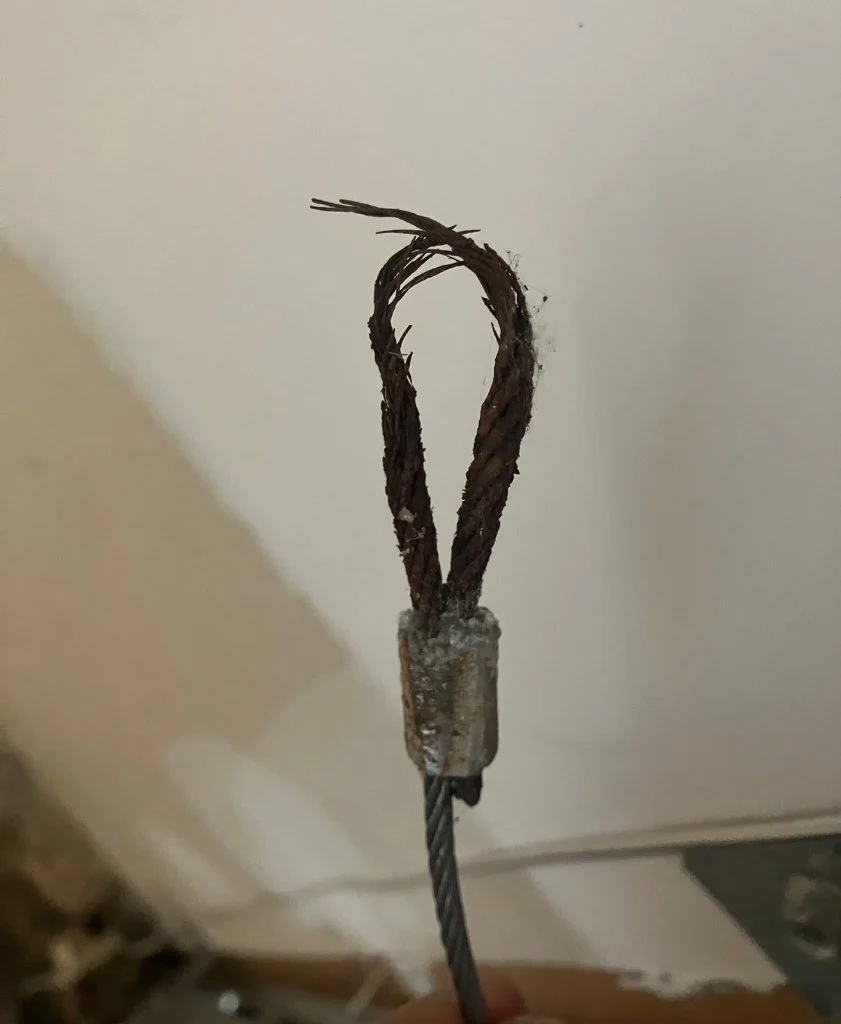
The cables on each side of the door carry the load from the springs. If one snaps or jumps off its drum, the door will hang crooked, jam in the tracks or refuse to lift at all. A cable hanging loose is a clear sign. Cables are under the same tension as the springs, so do not try to re-thread one yourself. Pronto handles this as a cable repair, and we check the springs and drums at the same time because a cable rarely fails on its own.
8. Is the door off its track or binding?
A door that was bumped by a car, or one whose rollers have worn out, can come partly out of the track and wedge itself in place. You may see a gap between a roller and the track, a bent section of track, or a door sitting at an angle. Forcing it with the opener makes the damage worse. See our off-track repair service for what that job involves.
9. Is the opener itself failing?
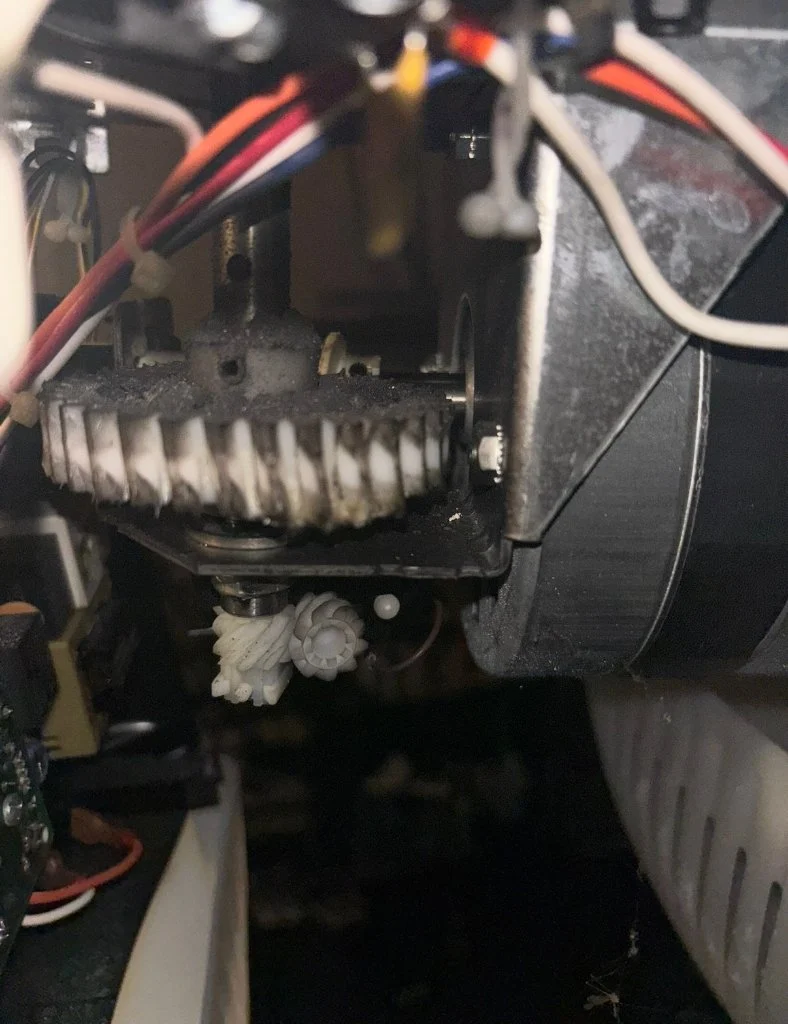
If power, lock mode, the release and the springs all check out, the problem is inside the opener. On chain-drive openers the most common failure is a worn plastic drive gear: the motor hums, but nothing turns. Logic boards also fail, particularly after a power surge, and the travel and force settings can drift so the opener stops or reverses early, which happens more in cold weather when the door is stiffer. Our opener repair team works on all major brands, and we will tell you honestly when an older opener is worth replacing instead of repairing.
When to call a technician
Call if the cause is a spring, a cable, a track or anything inside the opener, or if you have worked through the first five checks without finding it. Also call if the door is stuck open overnight, since that leaves the house unsecured. For a sense of typical costs before you call, our garage door repair cost guide lists typical Twin Cities price ranges for each repair.
Pronto covers Minneapolis, St. Paul and the surrounding suburbs seven days a week, usually the same day you call.
Garage Door Won't Open: Common Questions
Why does my garage door open a few inches and then stop?
The two most common causes are a broken spring, which leaves the opener trying to lift the full weight of the door, and a bottom seal frozen to the floor. Check for ice first. If the seal is free and the door still stops, stop using the opener and have the springs checked.
Can I open my garage door manually if the opener is broken?
Yes, as long as the springs are intact. Close the door, pull the red emergency release cord, and lift the door by hand. It should lift smoothly and stay in place halfway up. If it feels very heavy or drops when you let go, a spring is likely broken, so leave it closed and call.
Why won't my garage door open in the cold?
Cold causes three problems. The bottom seal freezes to the concrete, old grease stiffens so the door drags, and a spring near the end of its life is more likely to break. Free any ice, and if the door still resists, have the springs and lubrication checked.
Is it dangerous to use a garage door with a broken spring?
Yes. The opener can strip its gears or pull the door off balance, and the door can drop suddenly if it is released while open. Leave the door where it is and keep people and cars clear until it is repaired.
Garage Door Still Won't Open?
Call (612) 400-4180 or request a free quote. Same-day service across the Twin Cities, 7 days a week.