New Garage Door Installation: What to Expect From Start to Finish
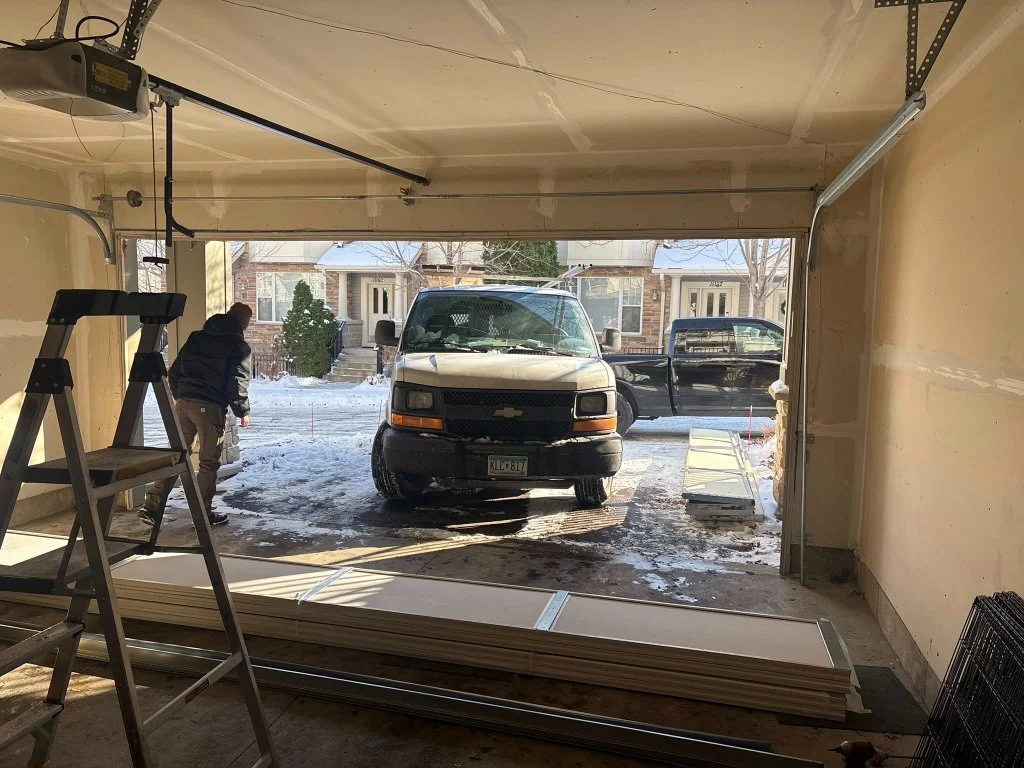
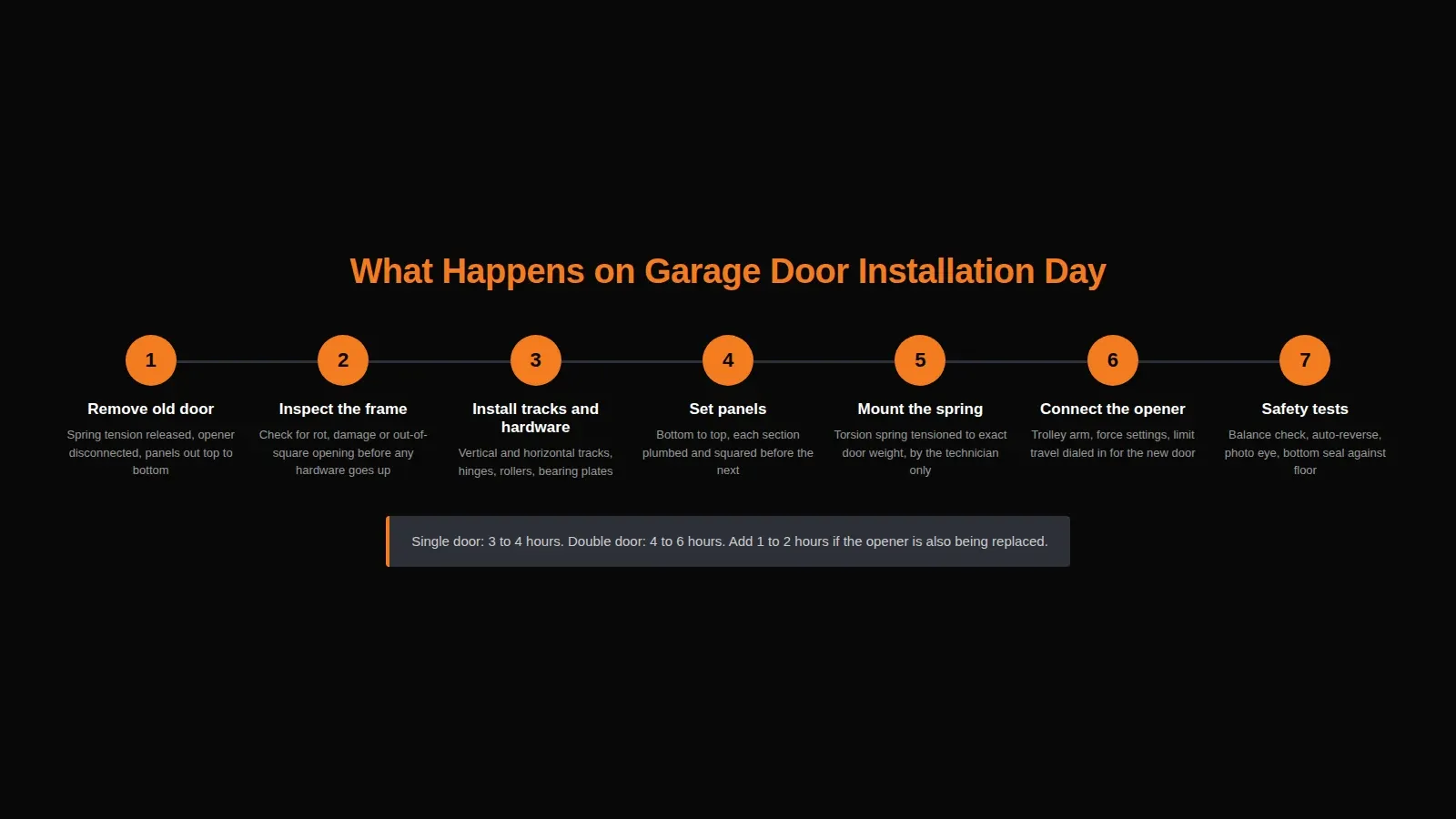
A new garage door goes in during a single visit, most of the time. A standard single-door job runs three to four hours; a double door or a replacement that also includes a new opener runs four to six. The technician removes the old door, inspects the frame, sets the new panels from bottom to top, mounts the spring, connects the opener, and runs a short set of safety tests before leaving. Here is what each of those stages looks like.
Before installation day: the measurement visit
Most jobs start with a measurement visit or a short phone walkthrough. The technician needs the rough opening width, height, side room on each side (the space between the opening edge and the nearest wall), headroom (the distance from the top of the opening to the ceiling), and backroom (how far the ceiling track will run into the garage). Standard sizes are 8 by 7 feet for a single door and 16 by 7 feet for a double.
Non-standard openings are common in the Twin Cities. Older detached alley garages in Minneapolis and St. Paul often have low headroom, short side room, or openings that have settled out of square over the decades. Knowing about these conditions before the truck arrives means the right hardware is on board.
Choosing the door: what matters in Minnesota
Steel doors handle cold well. They do not swell, crack, or warp the way real wood can, and they come in enough styles to match most homes. If you heat your garage, the door's insulation value matters more here than it does in warmer states. The temperature difference between a heated Twin Cities garage in January and the outside can reach 60 degrees or more, and an uninsulated steel door loses that heat quickly. A door with 2-inch polyurethane foam carries a typical R-value in the 16 to 18 range; a single polystyrene layer sits closer to R-6. Neither figure is required by code, but if the garage is heated, the better-insulated door pays back over time through lower heating bills.
Door weight is worth knowing because it affects the springs and the opener. A heavier door, whether from insulation, a thicker panel, or a wood-look composite skin, puts more load on the torsion spring and on the motor. The technician accounts for this when sizing the spring and when checking that your existing opener can handle it. If the opener is undersized for the new door, that conversation happens during the estimate.
What to do before the technician arrives
Clear roughly six feet of space on both sides of the door and along the ceiling toward the back of the garage. The technician needs room to work the panels and run the horizontal track. Move anything stored at the base of the door, and make sure the outlet for the opener is accessible. In winter, clear any ice or slush from the threshold. A frozen seal does not prevent the job, but it adds a step. If the old door is stuck open or the spring is already broken, mention it when you book so the truck arrives with the right parts.
What happens during the installation
Old door removal. The technician releases the spring tension using winding bars, disconnects the opener, and removes the panels from top to bottom. The springs, cables, and old hardware usually come out too. Most crews haul the old door away; confirm this when you schedule.
Frame inspection. Before any new hardware goes up, the technician checks the header and side jambs for rot, damage, or an opening that is well out of square. A gap of half an inch across the width is typical and workable. Larger gaps or soft wood at the jamb may need carpentry first. If there is a problem, you will hear about it before work continues.
Track and hardware. The vertical tracks mount on each side of the opening, the horizontal tracks angle back from the top toward the ceiling, and the hinges, rollers, and bearing plates go onto the first panel. On a torsion spring setup, the torsion bar and cable drums are mounted above the door header at this stage.
Panel installation. Sections go in from the bottom up. Each one is leveled, squared, and checked before the next is placed. Rushing this step is how doors end up running crooked, so the technician takes time here. The top section carries the top brackets that anchor the vertical tracks.
Spring mounting. This step stays in the technician's hands. A torsion spring is sized to the exact weight of the door and wound to a specific number of turns. The spring holds enough stored energy to cause serious injury if it is handled without the right tools and training. See our spring repair page for more on how torsion springs work and why adjusting one is not a safe DIY task.
Opener connection. If your existing opener is staying, the trolley arm connects the door to the rail and the force and travel limits are programmed for the new door's weight. If the opener is being replaced, it gets mounted to the ceiling, the rail is assembled, and wiring runs before the trolley arm attaches. Pronto works on LiftMaster, Chamberlain, and Genie openers. For questions about whether your existing opener is compatible with a new door, our opener service page covers the details.
Safety sensors. The photo eyes install at the base of each track and are aligned so the beam runs clean across the opening. The technician tests the auto-reverse by triggering the sensor while the door is closing.
How long does installation take?
| Job type | Typical time |
|---|---|
| Single door, existing opener stays | 3 to 4 hours |
| Double door (16 ft.), existing opener stays | 4 to 6 hours |
| Any door plus a new opener | Add 1 to 2 hours |
| Non-standard opening or custom door | Discussed at estimate |
These are working estimates. A frame that needs repair, a ceiling that limits headroom, or an opener rail that runs into an obstruction can add time. The technician will flag anything unusual during the estimate visit.
What the technician tests before leaving
A balanced door is the first check. The technician disconnects the opener, lifts the door by hand to about waist height, and releases it. A door in balance holds steady. One that drifts up or drops on its own needs a spring adjustment before the visit ends.
Auto-reverse is a federal safety requirement for openers installed on residential doors in the United States. The technician places an object on the floor under the door and closes it. The door must stop and reverse on contact. The photo eye test comes next: passing a hand through the beam while the door is closing should stop it immediately.
Force settings are dialed in so the opener applies enough force to close the door without exceeding the safe limit. Cold weather stiffens the grease and makes the door drag slightly, which is why force settings need room for seasonal variation without tripping the safety reverse on a cold morning.
The bottom seal gets a final look against the floor, and the side seals are checked against the frame. A gap at the bottom is where cold air, water, and pests enter. If the seal is not sitting flat, it is adjusted before the technician leaves.
What to ask before the crew leaves
- Where is the red emergency release cord and how do I use it safely (only pull it with the door fully closed if a spring may be broken)?
- What lubricant should I use and how often (a lithium-based spray on the rollers, hinges, and spring bar, twice a year)?
- Are there any conditions in the frame or the opening I should keep an eye on?
- Is the opener rated for this door's weight, and when was it last serviced?
If you need a new door, our door installation service covers the full job. For an idea of what a typical installation costs in the Twin Cities before you book, the garage door repair cost guide has ranges for installation alongside other common repairs. And if you want a sense of how long the new door, springs, and opener should last before they need attention, see how long a garage door should last.
New Garage Door Installation: Common Questions
Can I keep my existing opener when I get a new door?
In most cases, yes. The technician checks that the opener's motor is rated for the new door's weight and that the rail length fits the new headroom. A door heavier than the opener's rated capacity will wear the motor out faster, so this check matters. If the opener is old or undersized, the technician will say so during the estimate.
Do I need to be home for the whole installation?
Plan to be there for the start and the finish. The technician needs access to the garage and needs to walk you through the manual release, the force settings, and anything flagged during the frame inspection. You do not need to stand there for the full three to five hours, but arrange to be nearby.
What if my garage opening is not a standard size?
Non-standard widths, low headroom garages, and openings that have settled out of square are common in older Twin Cities homes, particularly in detached alley garages. Most configurations have hardware solutions. The measurement visit is where this gets sorted out, not on installation day.
How long will the new springs last?
Standard torsion springs are rated for around 10,000 cycles. At two openings a day, that works out to roughly 13 years. High-cycle springs are available if you want longer service life. Ask about them during the estimate if you use the door heavily.
What maintenance does a new door need in the first year?
Lubricate the rollers, hinges, and torsion bar twice a year using a lithium-based spray, not WD-40. Check the bottom seal after the first winter. Our safety inspection service covers the balance, spring tension, and opener settings on an annual basis so you catch wear before it turns into a repair.
Ready for a New Garage Door?
Call (612) 400-4180 for a free estimate. Same-day service across the Twin Cities, seven days a week.