Noisy Garage Door? What Each Sound Is Telling You
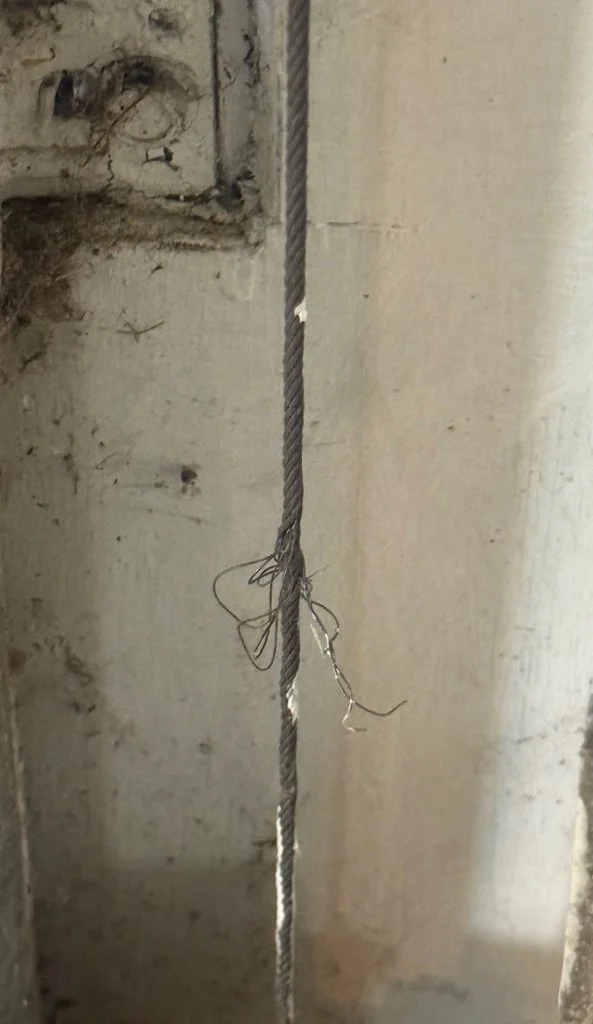
A noisy garage door is usually telling you something specific. Squeaking and squealing point to dry metal parts that need lubrication. Rattling is almost always loose hardware. A grinding sound suggests worn rollers or debris in the track. A loud bang followed by a door that suddenly feels very heavy is a broken torsion spring, and that one needs a technician. The guide below takes each sound and traces it to its most likely cause, so you know what to do and what to leave alone.
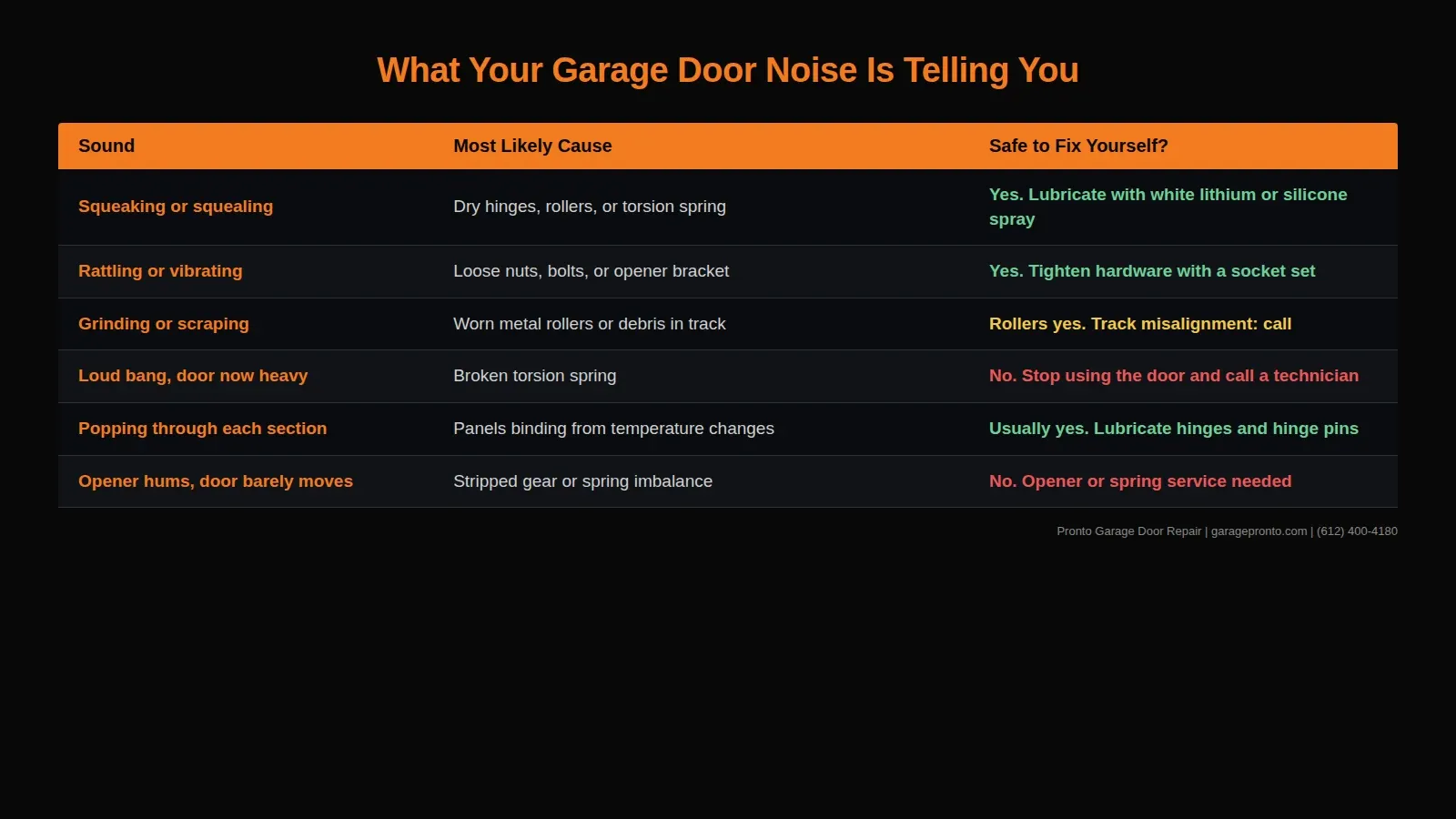
Sound diagnosis at a glance
| Sound | Most likely cause | Safe to fix yourself? |
|---|---|---|
| Squeaking or squealing | Dry hinges, rollers, or torsion spring | Yes, with the right lubricant |
| Rattling or vibrating | Loose hardware or opener bracket | Yes, with a socket set |
| Grinding or scraping | Worn metal rollers or track debris | Rollers yes; track misalignment: call |
| Loud bang, door now heavy | Broken torsion spring | No. Stop using the door |
| Popping through each section | Panel binding from temperature changes | Usually yes, lubricate hinges |
| Opener hums, door barely moves | Stripped gear or spring imbalance | No. Opener or spring service needed |
Squeaking or squealing
The most common noise complaint. Metal hinges and rollers dry out over time and begin to squeak against the track and brackets. The fix is a white lithium grease spray or a silicone-based lubricant applied to the hinges, roller bearings, and torsion spring coils. Do not use WD-40 on garage door parts. It is a solvent designed to displace water, not a long-term lubricant, and it strips the grease that is already there.
One part that most people skip: the torsion spring above the door benefits from lubrication just as much as the hinges do. Spray a thin coat along the coils while the door is closed, then open and close it once to work it in.
In Minnesota, this problem gets worse in autumn. Grease in hinges and roller bearings stiffens when temperatures drop toward freezing. A door that is quiet all summer often starts creaking in October. One application of lubricant before the first cold snap usually keeps things quiet through winter.
Rattling or vibrating
A rattling door is almost always a hardware problem, not a lubrication problem. Check every nut and bolt on the track brackets, hinges, and the opener mounting hardware. A standard socket set handles this in about 15 minutes. Snug each fastener by roughly a quarter turn. Do not overtighten the bolts on track brackets, because that can pull the track out of alignment.
Chain-drive openers rattle more than belt-drive models because the chain has slack and vibrates against the housing. If the rattle is clearly coming from the opener unit rather than the door, the chain tension may need adjustment. Anti-vibration pads on the opener mount reduce this noise significantly and cost a few dollars at any hardware store.
Grinding or scraping
Grinding usually means metal-on-metal contact somewhere along the door's travel. The most common cause is metal rollers that have worn down to the bare steel core, losing their smooth outer surface. These can be replaced with nylon ball-bearing rollers, which are quieter and do not need lubrication. Swapping worn metal rollers is a manageable project on most doors.
Debris in the tracks produces a similar sound, and is worth checking first. Wipe the inside of the track channel with a rag and do not spray grease inside the tracks, which traps dirt. A track that has gone out of plumb from a bump or years of vibration also causes grinding. A small gap can sometimes be corrected by loosening the bracket bolts, tapping the track back into position, and retightening. A significantly bent or warped track needs a technician.
A loud bang followed by a heavy door
A single loud bang from inside the garage, especially one you heard from another room, followed by a door that feels very heavy or will not open at all, is almost always a broken torsion spring. Springs do the lifting. The opener only guides the trolley; the springs carry the door's weight. One standard torsion spring is rated for around 10,000 opening cycles, which works out to roughly 7 to 10 years of daily use. When one breaks, the full weight of the door, often 150 pounds or more, falls on the opener.
Stop using the door. Do not run the opener against a springless door, and do not try to lift it by hand if you suspect the spring is broken. Torsion springs hold a large amount of stored energy, and replacing one safely requires winding bars and proper training. See our spring repair service for what that job involves. On a two-spring door, replacing both at the same time is usually the better call because the surviving spring is the same age and often fails soon after.
Popping as the door moves through each section
A series of pops as the door travels up or down usually means the panels are binding slightly at the hinges. Steel panels expand and contract with temperature. In the Twin Cities, a fall day might swing 40 degrees between a cold morning and a warm afternoon, and that range causes the metal to flex noticeably. Lubricating the hinge pins usually reduces this. If a panel is visibly bent or a hinge pin has worked loose, those cause the same sound and need to be addressed directly.
The opener hums but the door barely moves
This is worth separating from mechanical door noise because the problem is in the opener unit, not in the door or its hardware. If the motor runs and the chain or belt moves but the door barely lifts or stops partway up, first check that the emergency release was not pulled accidentally. If the release is engaged, reconnect it and try again. If the door still will not move, the most likely cause is a stripped plastic drive gear inside the opener or a spring that has lost tension to the point the opener cannot compensate. Both need service. Our troubleshooting guide for a garage door that won't open covers the full diagnostic sequence.
When lubrication fixes it for a week and then the noise comes back
Lubrication reduces friction. It does not fix wear. If the door goes quiet for a few days after you spray the hinges and then the squeaking returns, the hinges or rollers have worn to the point where lubrication cannot keep metal from metal. The parts need replacement. A safety inspection and tune-up covers the full door: rollers, hinges, cables, springs, and opener adjustment. For a door more than five or six years old, that inspection often identifies several small issues before they become larger ones.
When to call
Call a technician for any sound in the spring or cable category, for a track that is visibly bent, and for an opener that hums without moving the door. A squeak, a rattle, or a pop is usually safe to investigate yourself first. If you work through the checks above and cannot find the cause, or if the door starts making a new sound suddenly, Pronto covers St. Paul, Minneapolis and the Twin Cities suburbs seven days a week. Call (612) 400-4180 or request a free quote and we can usually get there the same day.
Noisy Garage Door: Common Questions
Can I use WD-40 on a squeaky garage door?
Not on the moving parts. WD-40 is designed to displace water and loosen rust, not to lubricate metal bearings under load. It will quiet a squeak briefly but strips existing grease and makes the noise worse within a week or two. Use a white lithium grease spray or a silicone spray rated for garage doors on the hinges, rollers, and torsion spring coils.
Why does my garage door get louder in winter?
Cold temperatures thicken the grease in hinges and roller bearings, increasing friction and noise. Springs also stiffen slightly in the cold, adding more resistance to the opener. A fresh application of lubricant in late October, before temperatures drop below freezing consistently, usually keeps the door quiet through winter. If the sound is grinding or a bang rather than squeaking, cold is not the cause and the hardware needs inspection.
My garage door made a sudden new sound. Should I stop using it?
It depends on the sound. A new squeak or rattle is low urgency. Check the hardware and lubricate before worrying further. A sudden loud bang followed by a heavier door, a door that hangs crooked, or a cable visibly slack on one side means stop immediately and call. Running the opener against a broken spring can damage the opener and leave the door in an unsafe position.
What lubricant is best for a garage door?
White lithium grease spray is the standard choice for hinges, rollers, and torsion spring coils. Silicone spray also works well and is slightly less messy. Both are available at hardware stores for under ten dollars. Do not apply grease paste inside the track channels, because it collects dirt and eventually causes the door to bind rather than slide.
How often should I lubricate a garage door?
Once or twice a year covers most doors. For a Twin Cities garage that cycles daily through a Minnesota winter, lubricating in late October and again in April addresses the two seasons when temperature extremes put the most stress on the hardware. If the door is older or sees heavy use, inspect the rollers and hinges each time and replace any that show visible wear.
Garage Door Making Noise?
Call (612) 400-4180 or request a free quote. Same-day service across the Twin Cities, 7 days a week.