Winter Garage Door Problems in Minnesota: 6 Causes and What to Do
The three garage door problems that account for most Minnesota service calls from October through March are a bottom seal frozen to the slab, a torsion spring that snaps during a cold snap, and an opener that reverses or stalls because the door is too stiff to move. If your door already will not open, start with the full troubleshooting checklist and come back here for the cold-weather causes specifically. The six problems below are the ones Minnesota winters cause more than any other climate.
1. The bottom seal freezes to the slab
When the temperature drops below freezing after a thaw, meltwater at the base of the door turns into a bond between the rubber bottom seal and the concrete. The opener pulls against it. If it cannot break the seal free, it trips the auto-reverse, or strains until a gear or cable gives.
Before pressing the button on a cold morning, check the threshold. If the seal is bonded to the slab, a plastic scraper along the base of the door will free it. A hair dryer works too. Warm water can help if the temperature is still above 20 degrees or so, but avoid very hot water, which refreezes as a thicker sheet on the next cold night.
After freeing the door, clear standing water from the threshold before it refreezes. A silicone spray applied to the bottom seal in October slows down the bonding. If the seal is cracked, hardened, or pulling away from the door, replace it before the first hard freeze. A damaged seal lets more water pool at the base and makes the problem worse every night.
2. Spring failures spike in the coldest weeks
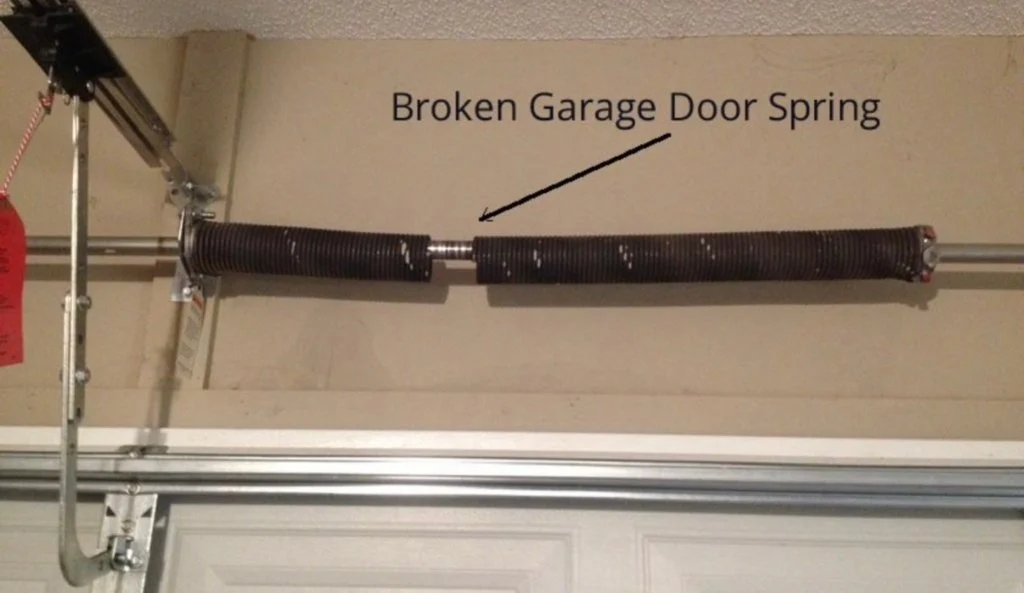
A broken torsion spring is the most common mechanical reason a garage door will not open. In Minnesota, the coldest weeks bring the highest number of spring failures. Cold temperatures make steel more brittle, and a spring that is already near the end of its service life is far more likely to snap at -10 degrees than at 35.
Most standard torsion springs are rated for around 10,000 cycles. At three to four uses per day, that is roughly seven to ten years. A lot of homes in the Twin Cities have springs that are well past that count heading into a hard winter.
The warning signs are a loud bang from the garage, a door that lifts only a few inches and stalls, or a door that feels unusually heavy when you try to lift it by hand. Look at the spring above the door. A broken spring will show a visible gap in the coil, sometimes an inch or two wide.
Do not run the opener once you see that gap. The door is carrying its full weight, which on a standard residential door can be 150 pounds or more, and the opener can strip its gears trying to lift it. Spring repair by a licensed technician is the only safe path. On a two-spring door, replacing both at once is usually the right call, because the second spring is the same age.
3. Openers that reverse or stall in extreme cold
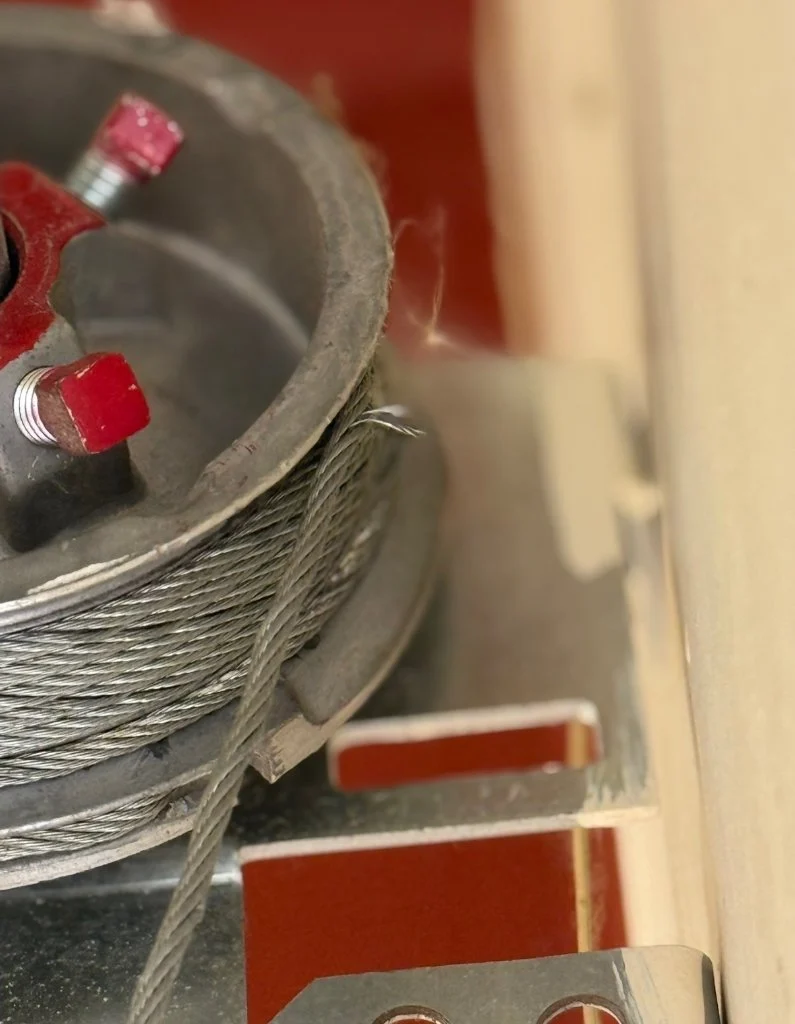
Modern openers have a force limit: a threshold of resistance beyond which the motor stops and reverses instead of straining. That limit is calibrated when the door moves freely. In extreme cold, thickened grease on rollers and hinges increases drag, and the opener can hit its force limit before the door finishes its travel.
The symptom is a door that starts moving, goes partway, and then reverses, with no ice at the threshold and no spring failure. Lubricating the hinges, rollers, and spring (see below) often solves this. After lubricating, run the door several times to warm the components, then test again. If the opener still reverses, the force and travel limits may need adjustment, which is part of a standard safety inspection and tune-up.
Battery-powered remotes and keypads are also affected by cold. A remote that stops responding at -15 but works at 20 almost always needs a fresh battery. Cold drains batteries faster than most people expect, and a remote that worked fine in October may fail by January on the same battery.
4. Detached alley garages in Minneapolis and St. Paul
Thousands of homes built in Minneapolis and St. Paul before 1950 have a detached, uninsulated garage facing the alley. These garages are exposed to the full outdoor temperature. In a polar vortex event, that can mean -20 degrees or colder. They also collect road salt and slush tracked in from the alley, which corrodes the bottom brackets and the hardware along the base of the door.
An attached, insulated garage in a newer suburb stays 20 to 30 degrees above the outdoor temperature on cold nights. An unheated alley garage does not. Everything in this post applies to both, but the alley garage sees more extreme swings and its hardware tends to be older.
If your alley garage door has not been serviced in several years, a fall tune-up before the first hard freeze is worth scheduling. A technician can check the spring condition, cable wear, and lubrication, and will tell you if a spring is close to the end of its service life before it fails at 2 a.m. in January and leaves your car stuck inside.
5. Hardware and grease that stiffen below zero
WD-40 is a water displacer and solvent, not a lubricant, and it is not the right product for garage door hardware. In cold weather it offers no lasting protection and the residue it leaves will collect grime on the rollers and tracks.
For Minnesota conditions, use a silicone-based spray or a white lithium grease spray on the roller stems where they contact the hinges, on the hinge pivot points, on the torsion spring coils, and on the cable drums. Both of these stay fluid well below zero. Apply a light coat to the spring coils and wipe off any excess so it does not drip onto the door.
Do not spray lubricant inside the tracks themselves. The tracks guide the rollers, and a slick track can throw a roller. Wipe the inside of the tracks with a dry cloth to remove any dried grease or debris. Lubricate in October before cold sets in, and again after a prolonged cold snap in January or February.
6. What you can check yourself
These are safe to check without tools or training:
- Check the bottom seal before pressing the opener button on cold mornings. Free any ice with a plastic scraper.
- Replace the remote battery if the remote fails in cold but the wall button still works. Cold kills batteries faster than most households expect.
- Check the console for lock mode. A LiftMaster or Chamberlain console with a lock button can disable all wireless remotes. Look for a lock icon and hold the button a few seconds to toggle it.
- Check that the emergency release trolley is engaged. If the motor runs but the door does not move at all, someone may have pulled the red release cord. Re-engage it with the door fully closed.
- Lubricate hinges, rollers, and the spring before the first freeze, then test the door through several cycles.
Stop when the problem is a spring, a cable, a bent track, or anything inside the opener. Those components are under tension or require calibration. Running the door against a broken spring or a binding track can turn a repair into a replacement.
Pronto covers Minneapolis, St. Paul, and the surrounding Twin Cities suburbs seven days a week. Same-day service is usually available. Call (612) 400-4180 to describe the problem and get a free estimate before any work starts.
Winter Garage Door Problems: Common Questions
Why does my garage door opener reverse in cold weather?
The most common reason is added drag from stiff grease on the rollers and hinges, which causes the opener to hit its force limit before the door finishes moving. Lubricate the hinges, rollers, and spring coils with a silicone or white lithium spray. If the door still reverses after lubrication, the force and travel settings need adjustment by a technician.
How do I keep my garage door seal from freezing to the ground?
Apply a silicone spray to the bottom seal each October. After any thaw, clear standing water from the threshold before the temperature drops below freezing. If the seal is cracked or rigid, replacing it before winter is the most reliable fix, because a damaged seal lets more water pool and refreeze.
Can cold weather break a garage door spring?
Yes. Cold makes steel more brittle, and a spring that is already near the end of its cycle life is significantly more likely to snap at -10 or -20 degrees than in milder weather. A loud bang from the garage and a door that will not lift are the most common signs. Stop using the door and call a technician.
Why does my garage door remote stop working in cold weather?
Cold drains batteries faster than most people expect. If the wall button works but the remote does not, replace the remote battery. A keypad that fails at -15 but works at 20 degrees is almost always a battery issue, not a wiring or receiver problem.
Is it safe to use my garage door if a spring might be broken?
No. A door with a broken spring can drop suddenly when the release is pulled, and running the opener against it can strip the opener gears or bend the top section of the door. If you heard a bang and the door is now very heavy or will not open past a few inches, leave it where it is and keep people and vehicles clear until a technician can inspect it.
Dealing With a Winter Garage Door Problem?
Call (612) 400-4180 or request a free quote. Same-day service across the Twin Cities, 7 days a week.