How to Lubricate a Garage Door: What to Use and What to Skip
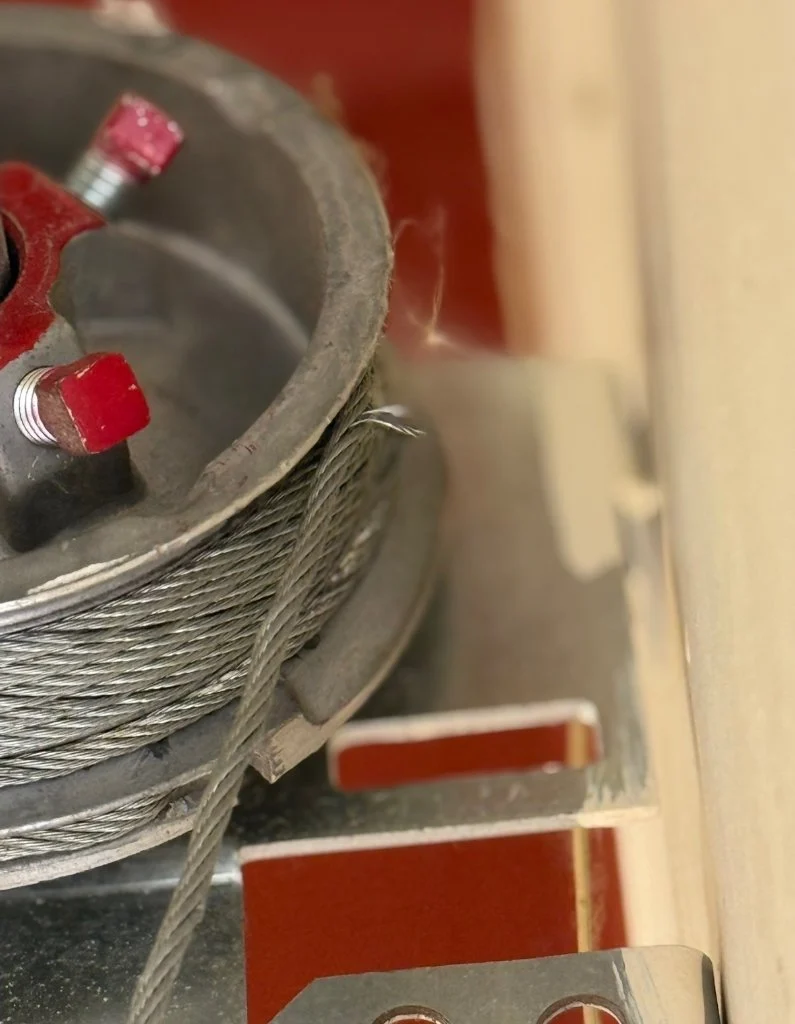
To lubricate a garage door, apply silicone-based spray or white lithium grease to the hinges, roller bearings, torsion springs, bearing plates, and lock. The job takes about 15 to 20 minutes and needs no special tools. The two most common mistakes are using standard WD-40 (it is a degreaser and solvent that evaporates quickly, not a lasting lubricant) and putting grease on the tracks (that causes the rollers to slip and collect dirt, which is the opposite of what you want).
This guide covers what to buy, where to apply it, the parts to leave alone, and why fall is the right time for this in Minnesota.
What you need
- Silicone-based garage door spray or white lithium grease, available at most hardware stores for under $10 a can
- A stepladder to reach the spring and bearing plates above the door
- A few rags to catch drips and wipe up excess when you are done
Both products work well. Silicone spray is easier to apply and less likely to drip on the floor or door panels. White lithium grease is thicker and holds on longer in dusty garages. Either is the right choice. Standard WD-40 is not: it is primarily a water displacer and solvent that loosens rust and removes old grease but does not replace it. The thin film it leaves evaporates within days, and the door is often drier afterward than it was before.
The parts to lubricate, in order
Hinges
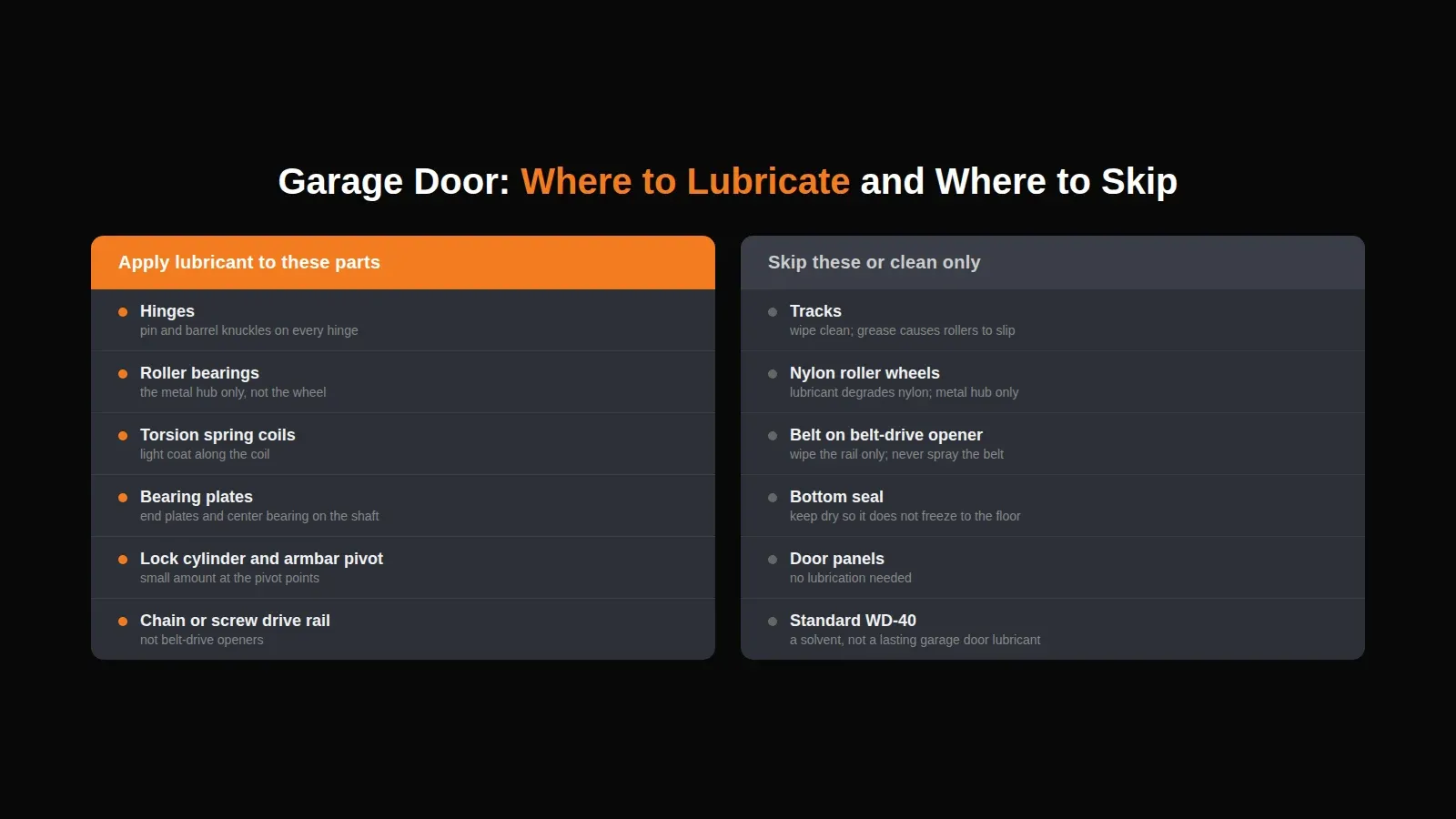
Each panel is connected to the next with hinges. A hinge has a pin running through a barrel knuckle on each side. Spray or wipe a small amount of lubricant onto the pin and both knuckles at every hinge, moving from the top of the door to the bottom. Run the door through a full cycle to work the lubricant in. A thin coat is enough. A standard two-car door has 12 to 16 hinges, and the ones at the bottom are the easiest to miss, so make a point of checking them.
Roller bearings, not the wheels
Roller type changes what you do here. Metal rollers have a hub with ball bearings inside. Apply the lubricant into the center of that hub where the bearing sits. Nylon rollers also have a metal bearing hub, but the nylon wheel itself should not get any lubricant. Silicone spray and grease degrade nylon over time, making it brittle and more prone to cracking. Keep the spray on the metal bearing only. If your rollers wobble in the track, have flat spots, or show visible cracks, lubrication will not fix them. That is a job for professional repair service.
Torsion spring coils
The torsion spring sits horizontally above the door on a steel shaft. Apply a light coat of lubricant along the coils. The coils rub against each other as the spring winds and unwinds on every cycle. Keeping that friction low reduces wear and noise, and it is one of the most useful things you can do to extend spring life.
In Minnesota, this step matters more than it does in warmer states. Cold temperatures stiffen grease and increase the load on the spring during the first hard turns in January and February. A spring that enters winter dry works under more stress than one that was lubricated in the fall. Springs are rated for a certain number of cycles; running them dry or under extra load shortens that number. Lubrication will not prevent a worn spring from breaking, but it helps a healthy spring stay that way longer.
Torsion springs hold a significant amount of stored energy. Lubricating the coils is safe. Adjusting, winding, or removing a spring is not a DIY job. If you see a visible gap in the spring or a coil that has separated, stop using the opener and call a technician.
Bearing plates
While you are at the top of the door, lubricate the bearing plates at each end of the torsion shaft and the center bearing plate where the shaft rides. These are the round metal mounts the shaft spins inside. They make noise when dry and wear faster without lubrication. The center bearing in particular sees high loads every time the door opens or closes.
Lock and armbar pivot
Apply a small amount of lubricant to the lock cylinder and to the pivot point where the armbar connects the door to the opener trolley. Both are easy to overlook and both squeak when they run dry. The lock cylinder benefits from fresh lubricant before winter, when moisture and cold can cause it to stiffen or stick.
Opener rail
Your opener type determines what you do here.
- Chain-drive opener: apply a light coat of white lithium grease along the chain
- Screw-drive opener: apply a thin coat of lubricant along the screw shaft
- Belt-drive opener: wipe the rail with a dry rag only. Never spray the belt itself; lubricant softens the rubber and shortens its life
If your opener has been making a grinding sound or running rough, lubricating the rail may help a little, but grinding usually means a worn gear or trolley component. Our opener repair service can tell you whether the problem is lubrication or a part that needs replacing.
Parts to skip or clean only
These are the spots where lubricant either does nothing useful or actively causes problems.
| Part | What to do instead |
|---|---|
| Tracks | Wipe clean with a damp rag. Grease on the tracks causes the rollers to slip and collects grit from the floor. |
| Nylon roller wheels | Keep dry. Only the metal bearing hub gets lubricant. |
| Belt on belt-drive opener | Wipe the rail with a dry rag. Never spray the belt. |
| Bottom seal | Keep clean and dry. Lubricant on the rubber seal can cause it to stick to the concrete floor during hard freezes. |
| Standard WD-40 | Use it to loosen rust or old dried grease before lubricating, then follow immediately with silicone spray or white lithium grease. |
How often, and why fall is the right time in Minnesota
Once a year is enough for most Twin Cities garages. Twice a year makes sense if the door runs more than 10 to 15 cycles a day, or if it starts squeaking before the year is out. A noisy door is telling you it is dry before the calendar prompts you.
Fall is the best window for the annual application. Fresh lubricant before temperatures drop below freezing means the grease is already worked into the metal when your door faces its hardest operating conditions. In Minneapolis and St. Paul, that window typically runs from mid-September through October, before overnight lows consistently fall below 20 degrees.
A door that goes into winter well-lubricated runs more quietly, puts less strain on the opener motor, and gives the springs a better chance of making it through the season without breaking. Cold makes everything stiffer. Lubrication is one of the few maintenance tasks that directly counters that.
After you lubricate
Reconnect power and run the door three or four full cycles to distribute the lubricant into every contact point. Then wipe any drips from the door panels, floor, and the faces of both tracks with a clean rag. Excess grease on the painted panels can stain the finish, and excess on the floor creates a slip hazard. A quick wipe after each application takes care of both.
When lubrication is not enough
Lubrication fixes noise and friction from dry metal parts. It does not fix rollers that are worn out, a spring near the end of its life, bent tracks, or a door that hangs crooked. Knowing the difference saves a repeat service call.
Signs that a part is failing rather than just dry:
- Rollers that wobble in the track, have flat spots on the bearing, or show visible cracks
- A torsion spring with a visible gap between coils where one section has separated
- Tracks with bends, dents, or sections that have pulled away from the wall framing
- A door that moves freely and hangs level but still binds or reverses after lubrication
- Grinding or banging sounds rather than a squeak (grinding is metal on metal from a worn part; a squeak is typically dryness)
If any of those show up during your lubrication run, the door is ready for a safety inspection and tune-up before winter sets in. A technician can identify which parts are worn and give you a cost estimate before something fails on a cold January morning.
For a complete picture of what to check and when across the whole year, the garage door maintenance calendar covers every seasonal task from spring through fall. Pronto serves Minneapolis and the surrounding Twin Cities metro seven days a week, usually within 60 minutes of your call at (612) 400-4180.
Garage Door Lubrication: Common Questions
Is white lithium grease or silicone spray better for a garage door?
Both work well. Silicone spray is easier to apply and less likely to drip on the floor or door panels. White lithium grease is thicker and stays put longer in dusty garages. Either is far better than standard WD-40, which is primarily a solvent that removes grease rather than adding it.
Can I use WD-40 on a squeaky garage door?
Standard WD-40 is a water displacer and solvent, not a lasting lubricant. It may quiet a squeak for a day or two, then evaporate and leave the metal drier than before. If you want to remove old dried grease or surface rust before lubricating, WD-40 works well for that step. Follow it immediately with silicone spray or white lithium grease before the metal runs completely dry.
How often should I lubricate a garage door in Minnesota?
Once a year is enough for most homes. Fall is the best time, before overnight temperatures drop below freezing. If the door runs more than 10 to 15 cycles a day or starts squeaking mid-season, a second application makes sense. Minnesota winters put more stress on springs and bearings than warmer climates, so staying on schedule matters more here.
Which parts of a garage door should not be lubricated?
The tracks should stay clean and dry; grease on the tracks causes the rollers to slip and collect dirt. The nylon portion of nylon rollers should stay dry; only the metal bearing hub gets lubricant. The belt on a belt-drive opener should not be sprayed; wipe the rail only. The bottom rubber seal should also stay dry so it does not stick to the concrete floor during a hard freeze.
What does it mean if my door is still noisy after lubrication?
If the noise continues after a fresh application, the source is likely a worn part rather than a dry one. Grinding or banging sounds usually point to a failing roller bearing, a worn hinge knuckle, or a spring near the end of its life. Have a technician check it before the worn part fails completely.
Door Squeaking or Due for a Tune-Up?
Call or text (612) 400-4180. Same-day service across the Twin Cities, seven days a week.