Garage Door Won't Stay Open: Why It Falls and What to Fix
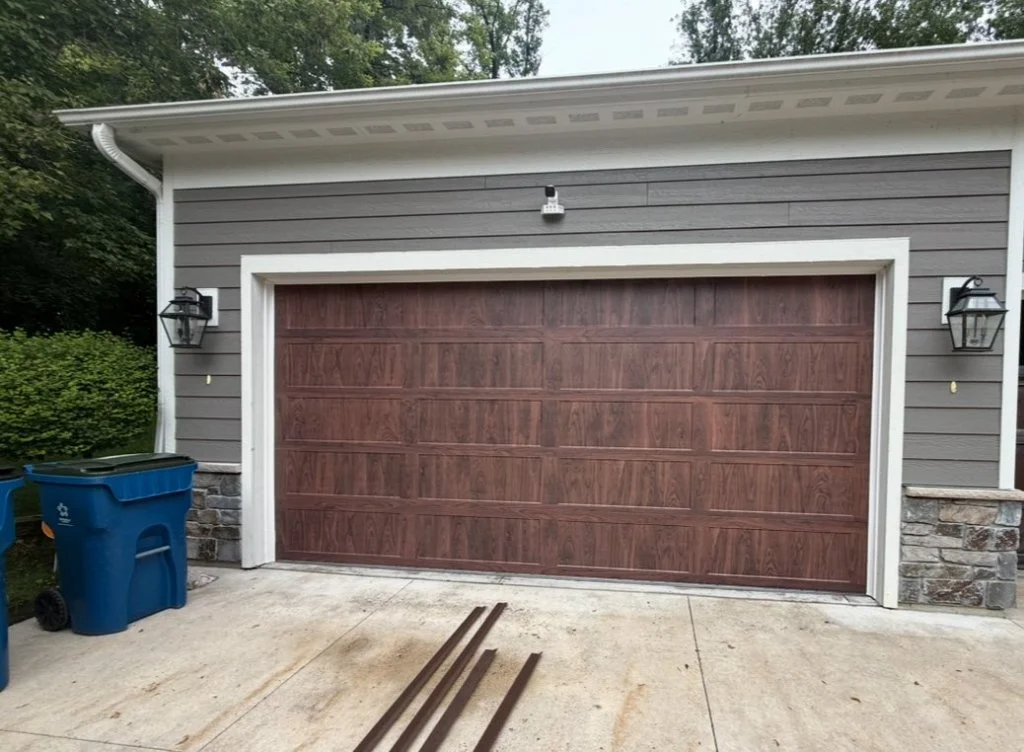
A garage door that will not stay open has one of two root causes: the springs have lost too much tension to hold the door's weight, or the opener's up-travel limit is set too short and the door stops before it fully opens. Springs cause the door to fall or drift back to the floor after each opening. A travel limit set too short stops the door at the same height every time, as if someone pressed stop. The balance test below tells you which one you are dealing with in about two minutes.
In Minnesota, there is a third thing to rule out first in fall and winter: a bottom seal frozen to the floor or ice packed into the lower tracks. That prevents the door from opening at all rather than from staying open, but check for it before moving on to the spring and opener diagnosis.
The balance test: the right starting point
Close the door completely. Pull the red emergency release cord to disconnect the door from the opener trolley. Lift the door by hand to about waist height and let go.
A properly balanced door will stay where you put it, or rise very slightly. If it falls back to the floor, the springs are not providing enough tension to hold the door's weight. If it rises on its own, the springs are over-tensioned. Either way, a technician needs to look at the spring setup.
If the door holds position when you do this test manually but still fails to stay open when you use the opener, the springs are probably fine. The problem is in the opener's travel or force settings.
Springs: the most common reason a door falls back down
The springs are what actually lift a residential garage door. A standard door weighs 150 pounds or more. The opener motor handles the moving, but the springs carry the load. Without enough spring tension, the opener motor cannot hold the door up once it reaches the open position.
Torsion springs (the horizontal bar mounted above the door opening) and extension springs (the coil springs running along the sides of the tracks) both lose tension over years of use. A standard spring is rated for around 10,000 open and close cycles. At one or two cycles a day, that works out to roughly seven to fourteen years. As spring tension fades, the door starts settling back down a little more each month until it no longer holds at all.
In Minnesota, springs often start failing in October and November. Cold makes spring steel more brittle, and the added load from a stiff, cold door and thickened lubricant accelerates wear. Many homeowners first notice the problem after the first hard freeze of the season, when the door that worked fine all summer suddenly falls back down within seconds of opening. If you heard a loud bang from the garage, possibly in the early morning, and the door now feels very heavy or will not open more than a few inches, a spring has broken.
Do not try to adjust or replace a torsion spring yourself. The spring stores enough energy to cause serious injury, and the job requires specific winding bars and training. See the spring repair page for what the repair involves and what to expect from a technician visit. For typical cost ranges in the Twin Cities, the spring replacement cost guide breaks down pricing by spring type and door size.

The opener travel limit: when the door always stops at the same height
Every garage door opener has a travel limit that tells it how far to move the door in each direction. The up-travel limit controls how high the door opens before the opener stops. If this limit is set too short, the opener stops the door partway, and the door may then drift or fall because it is not fully engaged in the open-lock position on the rail.
On most LiftMaster and Chamberlain openers, the limit settings are adjusted with small screws on the side or back of the motor head. The up-limit screw, often labeled with an arrow or the word UP, increases travel when turned clockwise. Some newer models use buttons on the console or a smartphone app instead of screws. Check the model number on your opener and find the adjustment procedure in the manual before changing anything. The force settings interact with the limits, and changing one without understanding the other can cause the opener to reverse unexpectedly.
If adjusting the limit does not hold, or if the opener consistently stops short even after you have set it correctly, have the opener inspected. A drive gear that is worn or a logic board that is failing will keep drifting back regardless of how the limits are set.
Worn cables and uneven lift
The lift cables run from the bottom brackets of the door up to drums at each end of the spring shaft. When a cable frays, stretches unevenly, or slips off its drum on one side, the door can tilt, bind in the tracks, or fail to hold position in the full-open spot. The giveaway is a door that sits at a slight angle when open, or one that falls further on one side than the other.
Cables are under the same tension as the springs and require the same care. Do not try to re-thread or replace a cable yourself. Our cable repair service checks the cables, drums, and cable tension during the same visit.
Cold weather and older garages in Minnesota
Minneapolis and the surrounding suburbs see temperatures that regularly drop below zero from December through February. Cold has two direct effects on garage door springs. First, steel becomes more brittle at low temperatures, so a spring already near the end of its rated cycle life is more likely to snap on a cold morning than on a mild one. Second, lubricant inside the spring coils thickens in cold, adding friction and increasing the load the spring has to work against.
If you have an older detached garage with alley access in Minneapolis or the nearby core neighborhoods, it may have the original extension springs from when the garage was built. Extension springs on a 20- or 30-year-old door are running well past their rated cycle life, and replacing them before winter is cheaper than a service call during a subzero snap. When a torsion spring breaks, the door simply becomes very heavy. When an extension spring breaks, the loose coil can fly and cause damage or injury, particularly if no safety cables are threaded through it. For more on how the two spring types differ and which one your door likely has, see the guide on torsion springs vs extension springs.
When to call
Call if the balance test shows the door falls or rises when you let go. That is a spring problem and it is not safe to leave the door in a state where it may fall on a person or a car. Also call if you can see a visible gap in the torsion spring above the door opening, if a cable is hanging loose, or if the door sits crooked in the frame.
The opener travel limit is one of the few things you can adjust yourself on a modern opener if you are comfortable reading the manual. Everything else on this list needs a technician. Pronto serves Minneapolis and the Twin Cities metro seven days a week, with same-day appointments available. Call or text (612) 400-4180.
Garage Door Won't Stay Open: Common Questions
Why does my garage door fall back down when I open it manually?
The springs are not providing enough tension to hold the door's weight. Run the balance test: disconnect the opener, lift the door to waist height by hand, and let go. If it falls, the spring tension is too low. This requires a technician to adjust or replace the springs, not a DIY fix.
How do I know if a garage door spring is broken rather than just worn?
A broken torsion spring has a visible gap of an inch or more in the coil above the door. You may also have heard a loud bang from the garage, often early in the morning or at the start of a cold snap. A door with a broken spring feels very heavy to lift and will not open more than a few inches with the opener running.
Can I adjust the garage door opener travel limit myself?
On most LiftMaster and Chamberlain openers, yes. The up-limit screw or setting is on the motor head and described in the owner's manual. If the door stops at the same height every time and the balance test shows the springs are holding, the limit setting is likely the issue. Adjust in small increments and test after each change.
Why does my garage door only open halfway and then fall back down?
The two most likely causes are an up-travel limit set too short on the opener, or a spring that has lost enough tension that the opener cannot push the door past the halfway point. The balance test tells you which one: if the door holds at waist height when disconnected from the opener, the springs are probably fine and the limit needs adjustment.
Is it safe to leave a garage door that falls back down?
No. A door that falls on its own is a hazard to anyone passing through, and to cars parked underneath. If you suspect a broken spring, do not operate the opener or try to hold the door open manually. Keep people and cars clear of the opening and call for same-day service.
Garage Door Falling Back Down?
Call or text (612) 400-4180 for a free quote. Same-day service across the Twin Cities, 7 days a week.