Torsion Spring vs Extension Spring: Which Does Your Garage Door Use
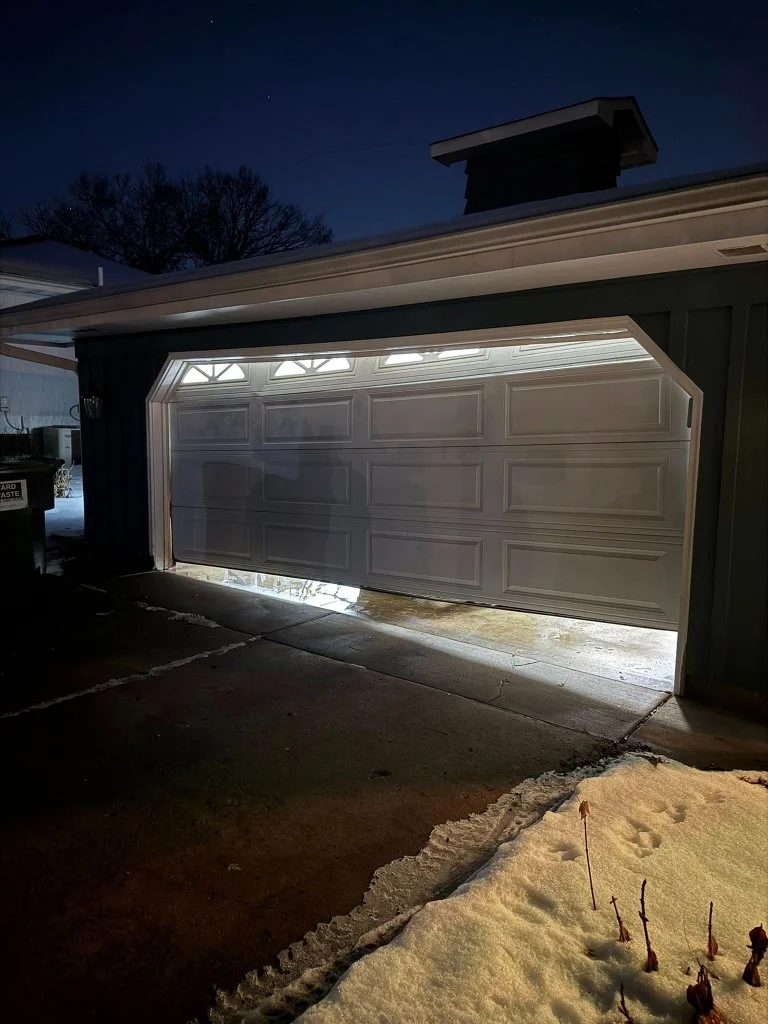
Most residential garage doors in the Twin Cities use one of two spring systems. If you see a horizontal spring on a metal rod centered above the door opening, that is a torsion system. If you see springs running along the horizontal ceiling tracks on both sides of the garage, those are extension springs. Understanding which type you have matters because the repair process, the parts and the safety rules are different for each.
How to tell which system your door has
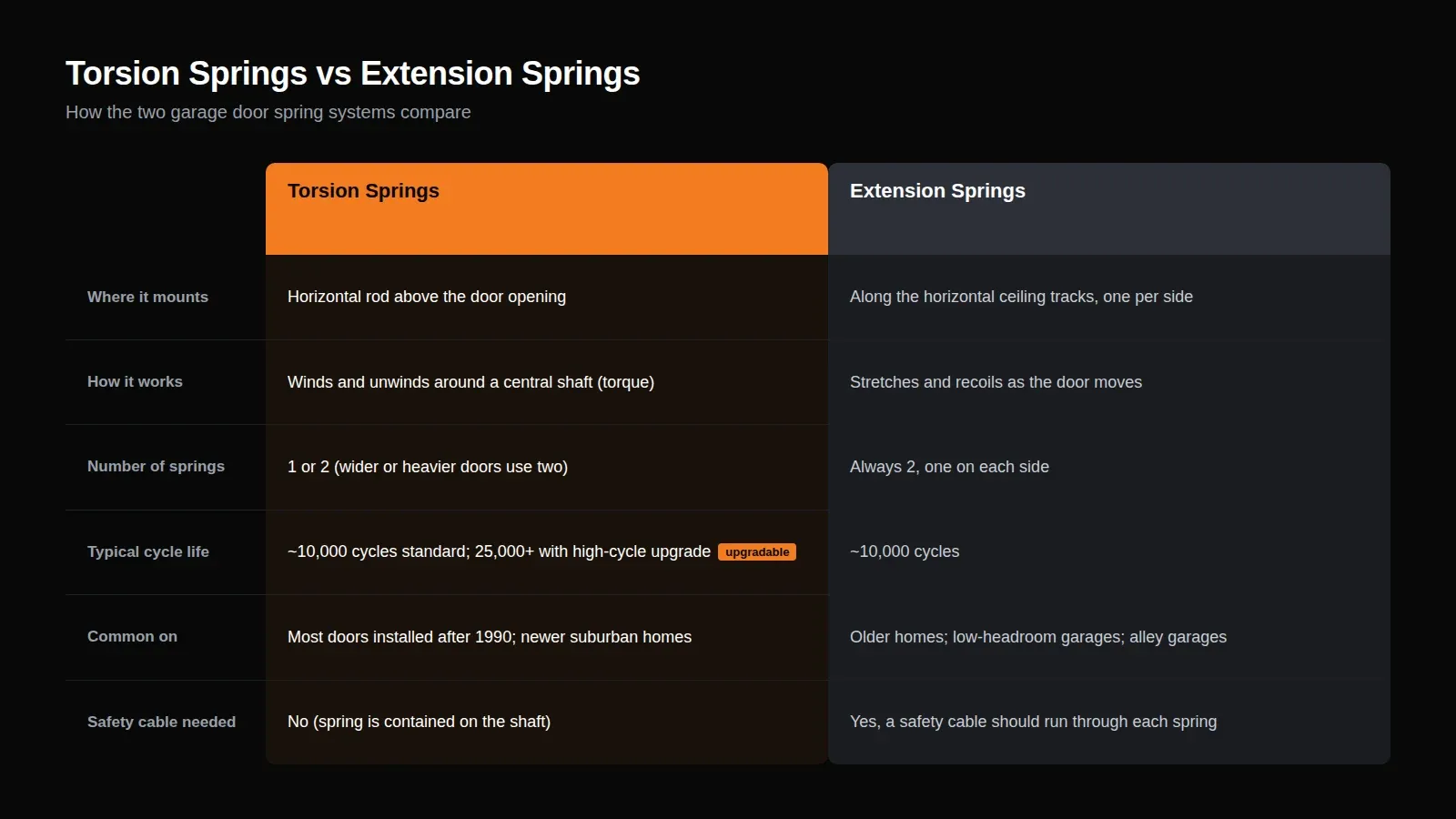
Stand inside your garage with the door fully closed and look at the wall directly above the door opening. A torsion setup has one or two coiled springs mounted on a metal shaft (called a torsion tube) running left to right across the full width of the door. The springs are compact and tightly wound. They do not change length as the door moves.
An extension setup has two springs, one running along each horizontal section of track toward the back of the garage ceiling. They are longer, thinner coils that hang slack when the door is open and stretch out as the door closes. If a cable runs through the center of each spring, those safety cables are the clearest sign you are looking at an extension system.
How torsion springs work
A torsion spring stores energy through twisting. As the door closes and lowers, the spring winds up around the metal shaft. When you open the door, the spring unwinds, and that rotational force spins the cable drums at each end of the shaft. The drums reel in the lift cables and raise the door. Because the torque acts across the full width of the door through a single shaft, the door rises evenly on both sides, which puts less wear on the tracks and the opener.
How extension springs work
Extension springs operate through stretch and recoil. Each spring connects through a pulley and cable to its side of the door. As the door closes, the spring stretches. When the door opens, the recoil pulls the cable and lifts that side. Because each spring works independently, the two sides can wear at slightly different rates, and the door can gradually go out of balance over time.
Which type does the typical Minnesota home have
Attached garages in newer Twin Cities suburbs built in the past 30 years are almost always torsion. Torsion became the standard residential system through the 1990s because it is smoother, requires less overhead clearance above the door and handles heavier insulated doors more reliably. Cities like Woodbury, Eden Prairie, Plymouth and Maple Grove built out during that period, so the vast majority of attached garages in those areas have torsion springs.
Older detached garages in St. Paul and south Minneapolis are more likely to still have extension springs. Many of those garages were built before 1960, when the extension system was common and the doors were lighter, single-panel wood. If your garage is off an alley and the original tracks do not have much room above the door opening, check for extension springs along the ceiling.
Lifespan and what happens when a spring breaks
Both spring types are rated at roughly 10,000 cycles for a standard spring. One cycle is a single open and a single close. At four uses per day, a standard spring lasts around seven years. A household running the door six or eight times daily can wear through a spring in four to five years.
Torsion spring failure is usually a sudden, loud bang, often at night or on a cold morning. The spring snaps on the shaft and the door drops. The opener cannot lift the door without spring assist, so pressing the button accomplishes nothing except straining the drive gears. Leave the door where it is and call. See spring repair for what the job involves.
Extension spring failure can drop one side of the door and tilt it sideways in the tracks. If the spring snaps without a safety cable running through it, the broken coil can travel across the garage at speed. That is why safety cables are not optional on extension springs. If you can see your extension springs and there is no cable through each one, that is worth correcting at your next service call.
Replacing one spring or both
When one spring breaks, the remaining spring is the same age and near the same cycle count. The standard recommendation is to replace both springs in one visit. The cost difference between replacing one spring and replacing a matched pair is not large, and doing both prevents a second service call a few months later when the other one goes. For extension springs, replace both sides at the same time for the same reason.
High-cycle torsion spring upgrades
Standard torsion springs are rated at 10,000 cycles. High-cycle springs are available in 25,000, 30,000 and 50,000 cycle ratings at a higher upfront cost. If your household uses the door heavily, or if you would rather not deal with spring repairs for a decade, ask about the upgrade during a repair visit. Pronto can tell you which sizes fit your door and what the difference in cost looks like. For most busy households the upgrade pays for itself over time by cutting out one or two replacement visits.
When to call for spring service
Call (612) 400-4180 for spring repair or spring installation across the Twin Cities metro. We serve Minneapolis, St. Paul and the surrounding area seven days a week, usually the same day. The technician confirms which spring type you have, brings the right parts and gives you a flat, upfront price before any work starts. If you are not sure whether your springs are due for service, a safety inspection and tune-up includes a spring check along with cables, rollers and balance. Our spring replacement cost guide covers typical price ranges in Minnesota if you want to know what to expect.
Torsion and Extension Spring FAQs
How do I tell if my garage door has torsion or extension springs?
Look above the door opening when the door is closed. One or two tightly wound springs on a horizontal metal rod across the full width of the door: torsion. Two springs running along the horizontal ceiling tracks toward the back of the garage, one per side: extension. Extension springs usually have a safety cable running through the center of each coil.
Can extension springs be converted to torsion springs?
Yes, in most cases. The header above the door needs a few inches of clearance for the torsion tube and springs. Most doors have enough room, but a low-headroom or low-clearance garage may need a different bracket arrangement. Pronto can check your setup and quote the conversion, which many homeowners do during a spring repair because torsion springs are generally smoother and require fewer moving parts.
Is it safe to use the garage door after a spring breaks?
No. With a broken spring, the opener must try to lift the full door weight on its own, which is typically 100 to 150 pounds or more for a standard residential door. That can strip the drive gears, snap the cables and drop the door suddenly. Leave the door in place and do not use it until the spring is replaced.
Why do garage door springs break more often in winter?
Cold steel is less flexible, and a spring near the end of its rated cycle life is more likely to fail on the first night temperatures drop hard. That is why spring calls are highest from December through February in Minnesota. A fall tune-up lets a technician check the remaining life on your springs before the cold sets in.
How long does a garage door spring replacement take?
Most replacements on a standard one-car or two-car door take one to two hours. The technician carries common spring sizes on the truck, so the job is usually done in one visit. Replacing both springs at the same time adds a small amount of time compared to replacing just one.
Spring Trouble in the Twin Cities
Call (612) 400-4180 or request a free quote. Same-day service, 7 days a week.