Garage Door Frozen Shut: How to Open It and Stop It Happening Again
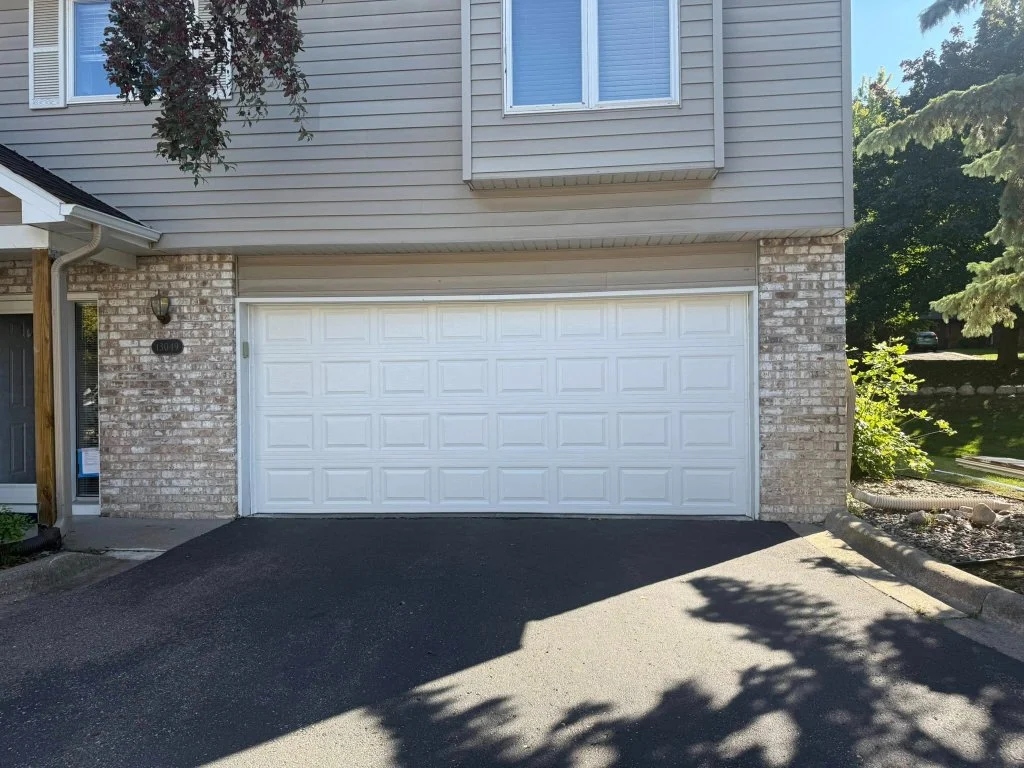
A garage door frozen shut is almost always the bottom seal bonded to the concrete slab by a thin layer of ice. To open it safely, run a hair dryer on low heat along the base of the door, or work a plastic scraper along the gap between the seal and the slab. Apply gentle upward pressure as the ice releases. Do not force the opener and do not use a metal tool on the seal. Most doors free up in two to five minutes once the ice bond breaks.
Why garage doors freeze shut in Minnesota
The mechanism is the same almost every time. Meltwater, from tire tracks dragging in slush, snowmelt running in from outside, or ice at the threshold thawing on a warmer afternoon, collects at the base of the door. When temperatures drop below freezing overnight, that film of water bonds the rubber bottom seal to the concrete.
In the Twin Cities, the freeze-thaw cycle is what makes this a recurring problem rather than a single winter event. A swing from 35 degrees in the afternoon to 10 degrees overnight is common from November through March. Doors in detached alley garages with unheated slabs encounter this more often than attached garages, where the slab stays slightly above freezing from the house heat.
A worn or cracked bottom seal makes it worse. A healthy seal is pliable and sheds water. One that has gone stiff or brittle from age holds moisture and bonds to concrete much more readily. If your door freezes shut regularly, the condition of the seal is worth checking first.
How to open a frozen garage door safely
Work through these steps in order. The first two resolve the majority of cases.
- Try gentle manual pressure first. Grab the bottom of the door and apply steady upward force by hand, without the opener. If the bond is thin, this is enough to break it. If you feel significant resistance, stop and move to the next step.
- Use a hair dryer along the base. Set it to low or medium heat and run it slowly along the bottom edge, keeping it a few inches from the seal. The goal is to soften the ice rather than blast it, which protects the rubber. This is the safest method for most residential doors.
- Use a plastic scraper for visible ice at the threshold. Work the scraper along the gap at a shallow angle, pushing rather than prying. The goal is to break the ice bond at the contact line, not to lever the door upward.
- Apply rock salt or calcium chloride to the base. If the bond is thick and a scraper is not reaching it, scatter calcium chloride along the threshold and give it five minutes. Calcium chloride works at lower temperatures than standard road salt and is less aggressive on concrete over time.
Once the door is free, brush away any remaining slush and ice from the threshold before you close it again. Leaving it in place almost guarantees the same situation the next morning.
What not to do
These are the common mistakes that turn a minor inconvenience into a repair bill.
- Do not run the opener against a frozen door. Forcing the opener can strip the plastic drive gear, snap a torsion spring on a door that is already under stress, or pull the bottom section out of shape. The motor will often throw an error and reverse, but the damage may already be done.
- Do not use a metal scraper or pry bar. Metal tools tear the bottom seal. A seal that has been cut or gouged will not seat properly, and that gap lets water in all winter.
- Do not pour hot water. Hot water melts the ice faster than cold, but it also soaks the threshold, the seal, and the slab. When the temperature drops, you are left with a thicker sheet of ice than before.
- Do not keep pressing the button. One press is enough to confirm the door is frozen and not broken. After that, switch to manual methods and save the opener the strain.
How to stop it from happening again
Opening a frozen door fixes the immediate problem. These five steps reduce how often it happens.
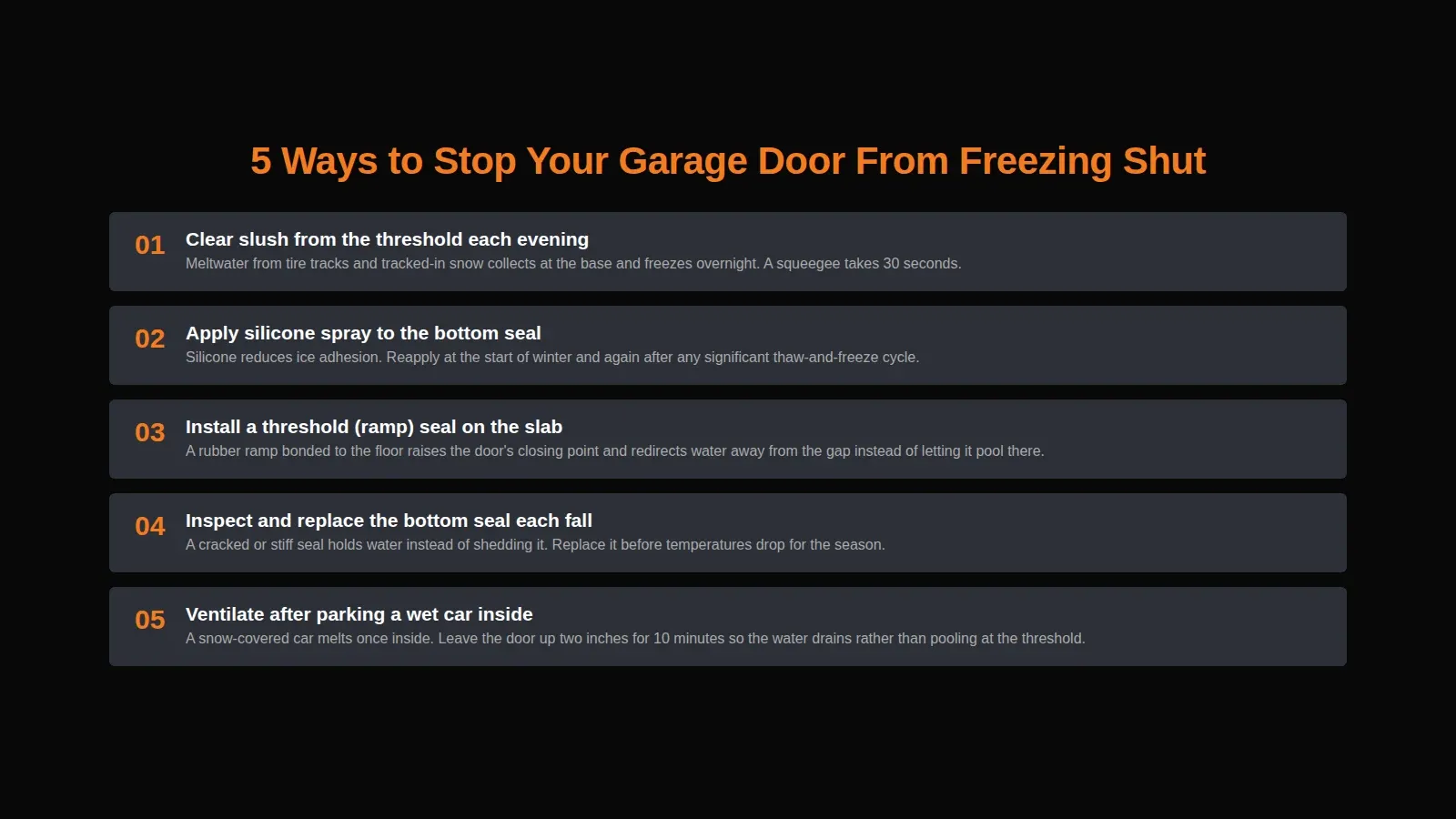
Clear the threshold each evening during thaw-and-freeze weather. This is the highest-return step. Meltwater from a wet car or from rain that tracks in through the door is what causes most freezes. A squeegee along the base of the door takes about thirty seconds and eliminates the problem at the source.
Spray the bottom seal with silicone lubricant before winter and again after any significant thaw. Silicone creates a surface that ice has trouble bonding to. Use a silicone-only spray, not WD-40, which washes away quickly and can degrade rubber over time.
Consider a threshold seal. A rubber threshold, also called a ramp seal, is bonded to the slab and raises the contact point between the door and the floor by about half an inch. It redirects water away from the gap rather than letting it pool there. Many Twin Cities homeowners add one after the second or third freeze of a season.
Inspect the bottom seal each fall. Run your hand along the full length. It should be pliable and even. Sections that are cracked, hardened or missing should be replaced before the first hard freeze. See our guide on garage door bottom seal replacement for a full walkthrough on spotting wear and swapping the seal.
Ventilate after parking a wet car inside. A car covered in snow and slush melts when it comes into a heated or partly heated garage. That water pools at the base of the door and freezes overnight. Cracking a window or leaving the garage door open two inches for ten minutes after parking lets it drain or evaporate rather than freeze.
What if the door feels immovable but there is no ice
If you have checked the threshold and found no ice, but the door still feels too heavy to lift manually or the opener struggles and reverses, the problem may not be a freeze.
A broken torsion spring produces very similar symptoms. The door feels immovable, the opener strains against it, and there is often a loud bang from the garage in the minutes before the door stopped working. Look at the spring mounted above the door on the horizontal bar. A visible gap in the coil, or a spring that is clearly separated into two pieces, means it has broken. Torsion springs hold significant stored energy and replacing one requires winding bars and training. This is not a DIY repair. Leave the door down and call.
On older doors, rollers that have seized in cold weather can also make the door bind. The difference is that a roller problem usually shows up as the door moving crookedly, binding on one side, or making a grinding sound, rather than simply refusing to lift at all.
If you are not certain whether it is ice, a spring or a roller, treating it as ice first and trying a hair dryer is a safe diagnostic step. If that does not free the door, stop and call rather than forcing it further.
When to call a technician
Call if the opener has already been run against the frozen door multiple times and you hear unusual sounds when it operates. Some opener damage is not obvious right away. Call if the bottom seal is torn or gouged from a metal tool and no longer seats flat, since a gap lets water in all winter. And call if you suspect a broken spring rather than a freeze.
Pronto serves Minneapolis, the surrounding suburbs and the full Twin Cities metro seven days a week. A fall safety inspection and tune-up is also worth considering before the freeze season begins. The technician checks the seal condition, lubricates the moving parts, and sets the opener's force and travel so it stops safely rather than straining against minor resistance.
Frozen Garage Door: Common Questions
How long does it take to open a garage door frozen shut?
Most doors free up in two to five minutes with a hair dryer on low heat. A thicker bond that built up over several freeze-thaw cycles without clearing the threshold can take ten minutes or so. If a hair dryer alone is not enough, rock salt or calcium chloride along the base usually finishes the job.
Is it safe to use the garage door opener on a frozen door?
No. Running the opener against a frozen door can strip the drive gear, snap a marginal spring, or pull the bottom section out of shape. Free the ice manually first, confirm the door moves smoothly by hand, then use the opener.
Why does my garage door freeze shut every year even though I replaced the seal?
A new seal helps but is not always enough on its own. The usual cause in repeat cases is meltwater pooling at the threshold and not being cleared each evening. A slab with no slope away from the door collects water even with a good seal. Adding a threshold ramp seal and clearing slush nightly typically stops the cycle.
What is the best lubricant to prevent a garage door from freezing shut?
Silicone spray applied to the bottom seal is the most effective option for preventing ice adhesion. For the springs, rollers, and hinges, lithium grease performs well in cold weather, but it does not reduce ice bonding on the rubber seal itself. Use silicone specifically on the seal.
Will a frozen garage door damage the bottom seal?
Opened correctly with a hair dryer or plastic scraper, no. If you force the opener or use a metal tool to pry it open, yes. Metal tools cut or tear the seal, and running the opener against a freeze can pull the seal off the door panel entirely. A damaged seal needs replacement before the next freeze cycle.
Garage Door Frozen or Not Working Right?
Call (612) 400-4180 or request a free estimate. Same-day service across the Twin Cities, 7 days a week.