Garage Door Weatherstripping: When to Replace It and What to Look For
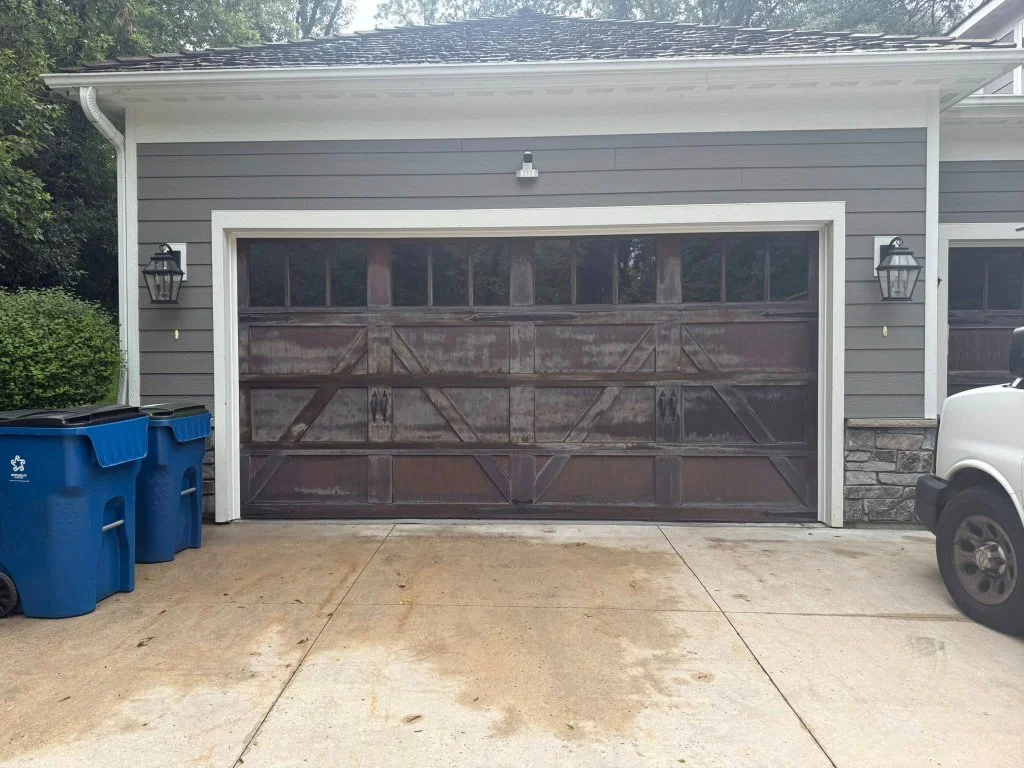
Garage door weatherstripping typically lasts between 5 and 10 years, but cold winters and road salt can cut that in half in Minnesota. When the seals crack, compress flat, or pull away from the frame, the door stops blocking cold air, water, and pests. Here is how to identify which seals are failing, what each type does, and when replacing one is a job for a technician rather than a Saturday project.
What weatherstripping does on a garage door
A garage door has gaps around every edge where it meets the frame, the floor, and the section above it. Weatherstripping fills those gaps. A good seal keeps cold air out in winter, blocks rain and snowmelt from getting in under and around the door, stops pests from using those gaps as entrances, and reduces dust and exhaust from drifting between the garage and any attached living space. Unlike springs or cables, it is not a structural part, which is why a worn seal often gets ignored until someone notices a draft, a heating bill, or a mouse.
The four types of weatherstripping on a typical garage door
Most doors have at least three of these four seals. The bottom seal and perimeter molding are on almost every door. Threshold seals and section seals are common but not universal.
| Type | Where it sits | What it seals |
|---|---|---|
| Bottom seal | Attached to the bottom edge of the door | Gap between the door and the floor as the door closes |
| Perimeter molding | Nailed to the door frame on both sides and the top | Gap between the door and the door frame when the door is closed |
| Threshold seal | Adhesive strip on the floor; door closes down onto it | Same gap as the bottom seal from the floor side; also blocks low water intrusion |
| Section seals | Between each horizontal panel on the door | Gaps that open between sections when the door bends around the overhead curve |

Signs each type of seal has failed
The clearest test for perimeter molding is to close the door during daylight and stand inside with the garage light off. Any line where you can see light coming in means the seal is no longer making contact. For the bottom seal, run your hand along the floor line on a cold day and feel for a draft. A bottom seal that leaves a powdery residue or a smear of broken rubber on the floor is past its useful life.
- Cracks, tears, or chunks missing from the rubber or vinyl
- Visible daylight along the sides or top of a closed door
- Cold drafts at floor level on the inside of the door
- Water on the garage floor after rain that did not drip from the roof
- Mice or other pests getting in through a gap you cannot otherwise find
- Bottom seal leaving black or gray smear marks or powdery debris on the floor
- Perimeter molding has pulled away from the frame and no longer presses flat against the door
How Minnesota winters accelerate weatherstripping wear
Standard rubber compounds become stiff and brittle at temperatures below around minus 20 Fahrenheit, which Minneapolis sees several nights each winter. The seal flexes when the door moves and when temperatures swing. Enough cycles and the rubber cracks at the fold points, usually along the bottom edge where it contacts the concrete.
The bigger risk is ice. Meltwater runs down the door, pools at the bottom seal, and refreezes overnight. In the morning, the opener tries to lift a door whose seal is frozen to the concrete. If the seal does not break free cleanly, it tears or gets pulled from its retainer track. This is one of the most common reasons for a sudden bottom seal failure in January or February.
Road salt is the third factor. Tires carry salt and slush in from the driveway, and it settles at the threshold. Salt eats rubber and vinyl faster than plain water. In Minneapolis neighborhoods where older detached garages face the alley directly, the threshold gets constant salt exposure from November through March.
What you can replace yourself and what calls for a technician
Perimeter molding on the door frame is the most straightforward replacement. It is nailed or screwed to the wood stop molding with no springs or cables involved. You pry off the old strip, clean the surface, cut the new strip to fit, and fasten it. This is a reasonable project for most homeowners with basic tools.
Bottom seal replacement varies by door. On many doors, the rubber insert slides through an aluminum retainer track on the bottom of the door. You pull the old one out from one end and slide the new one in. The challenge is matching the profile. T-end, bead, and bulb profiles are not interchangeable. Measure or photograph the old seal before buying a replacement.
Call a technician if the retainer track is bent, corroded, or has broken fasteners, since that repair involves the bottom brackets and cables. Also call if the door sits unevenly on the floor: a new seal will wear out the same way on an unlevel door.
Our guide to bottom seal replacement covers the specific steps for the most common profiles. For a full picture of what a garage door repair involves, Pronto offers free estimates and can identify the problem in a single visit.
How long does replacement weatherstripping last in Minnesota
Rubber bottom seals last 5 to 10 years under normal conditions; vinyl perimeter molding typically lasts 5 to 8 years before it cracks when flexed. If your door faces north or the garage sees ice accumulation at the threshold every winter, expect the lower end of those ranges.
The practical question is not lifespan but inspection frequency. A quick check each fall before the cold sets in, and once in spring after the freeze-thaw season, catches a failing seal before it lets in a winter's worth of cold air. Our Minnesota garage door maintenance calendar covers the full annual checklist if you want a schedule to follow.
What a weatherstripping visit from Pronto includes
When Pronto comes out to replace weatherstripping, we look at all four seal types, not just the one you called about. Perimeter molding and bottom seals often fail together since they age at the same rate on the same door. We also check that the door is sitting level, because an uneven door causes the new seal to wear unevenly from day one.
Call (612) 400-4180 or use the free quote form. For garage door repair in Minneapolis or any Twin Cities suburb, we are available 7 days a week. Our safety inspection and tune-up service includes a weatherstripping check as part of the visit.
Garage Door Weatherstripping: Common Questions
How do I know which type of bottom seal my door takes?
Pull the old seal partway out of the retainer track and look at the cross-section. The three most common profiles are T-end (a flat rubber strip with a T-shaped edge that slides into a double-channel track), bead end (a round bead that snaps into a single channel), and bulb seal (a hollow tube that compresses against the floor). Take a section of the old piece to the hardware store or photograph it before buying a replacement.
Can I replace just the rubber insert without replacing the whole bottom bracket?
On most doors, yes. The rubber insert slides through the aluminum retainer track, and only the rubber needs replacing. The exception is when the retainer track itself is bent, broken, or has corroded fasteners, in which case the whole assembly needs to come off.
How much does it cost to replace garage door weatherstripping in Minnesota?
Perimeter molding materials run roughly 20 to 60 dollars for a standard residential door, plus an hour or two of labor if you hire someone. Bottom seal materials are 15 to 50 dollars depending on the profile and length. Threshold seals run 30 to 80 dollars. A technician visit to replace one or more seals typically includes inspecting the door for related issues at the same time.
What is the difference between a bottom seal and a threshold seal?
The bottom seal is attached to the door and moves with it every time the door opens and closes. The threshold seal is a strip on the floor that the door closes down onto. Some garages have only one of them. Having both provides the best seal because they compress against each other rather than against bare concrete.
How often should I inspect garage door weatherstripping in Minnesota?
Check it twice a year: once in October before the first hard freeze, and once in April after the freeze-thaw season ends. In October, look for cracks or compression set in the rubber. In April, look for tears caused by ice bonding the seal to the floor over the winter.
Need Weatherstripping Replaced?
Call (612) 400-4180 or request a free quote. Same-day service across the Twin Cities, 7 days a week.