Garage Door Off Track: Why It Happens and What the Repair Involves
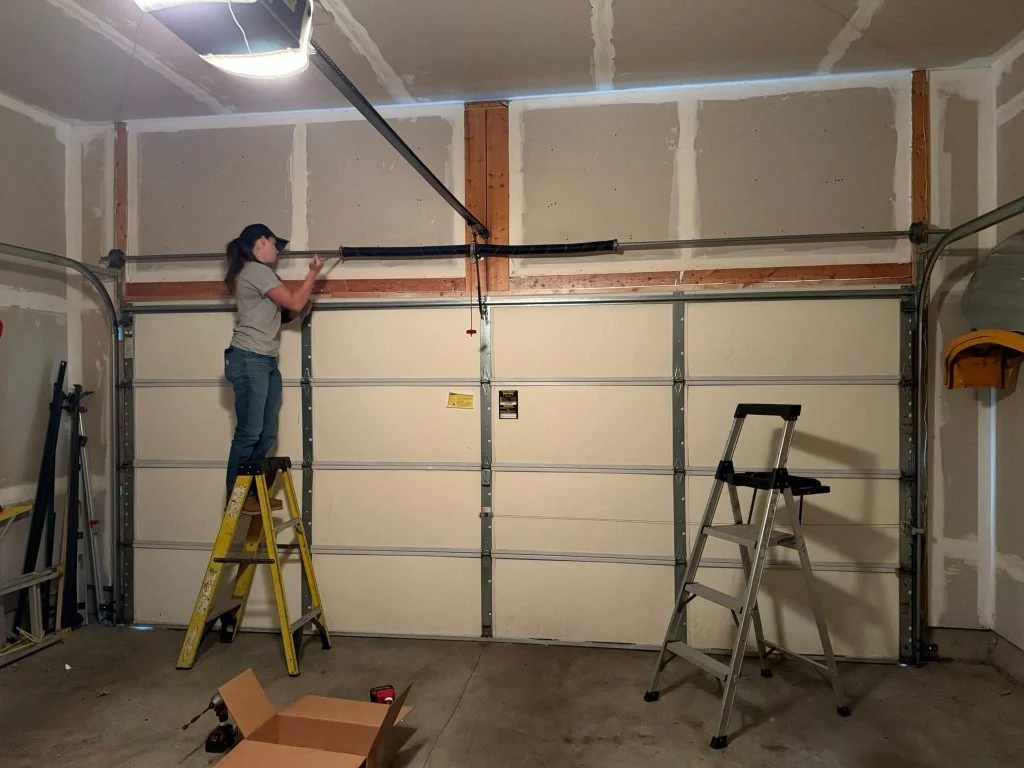
When a garage door comes off its track, one or more rollers have left the track channel, leaving the door without guidance on that side. The door may hang at an angle, refuse to move, or bind after lifting a few inches. Stop using the opener right away. Running the opener against an off-track door bends the track further, strips the drive gear, and on a door with a cable or spring problem, risks the door dropping under its own weight. A standard residential sectional door weighs between 100 and 200 pounds depending on size and material.
How the track system holds a garage door
A sectional garage door runs on two tracks: vertical sections on each side of the opening and a horizontal section that curves overhead. Steel rollers, mounted on hinges at the edges of each door panel, ride inside those channels. Most residential doors carry 10 to 12 rollers. As the door opens, the rollers follow the curve from vertical to horizontal and carry the door into the overhead position. When a roller leaves the channel, that part of the door loses its guidance and support. If the opener keeps running, more rollers follow.
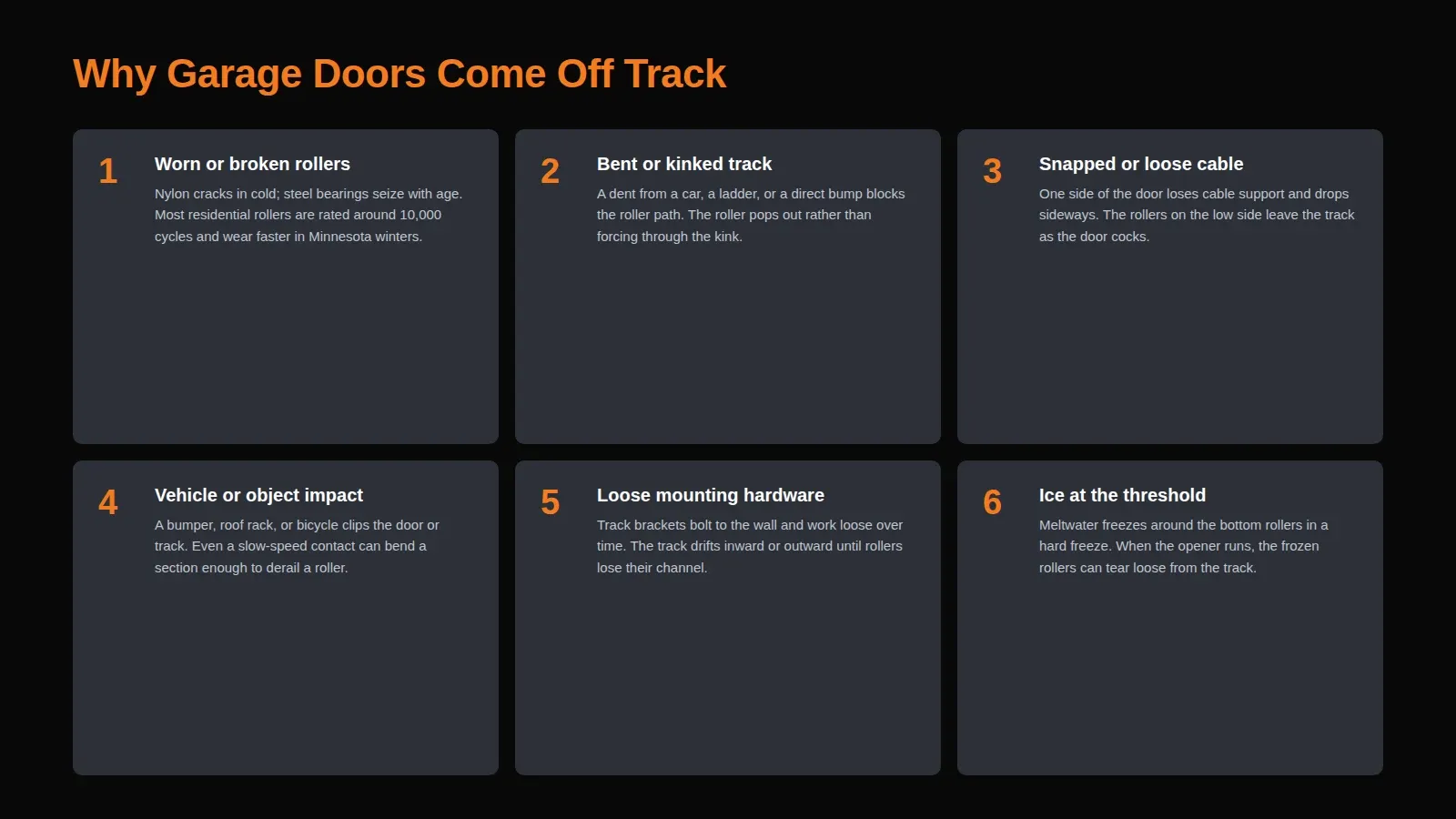
The six most common causes
| Cause | What pushes the door off track |
|---|---|
| Worn or broken rollers | Nylon cracks in cold weather; steel bearings seize with age. The worn roller wobbles in the channel and eventually pops out. |
| Bent or kinked track | A dent from a car, a ladder, or any direct contact blocks the roller path. The roller pops out rather than forcing through. |
| Snapped or loose cable | One side of the door drops when the cable fails, cocking the door sideways. Rollers on the low side leave the channel in sequence. |
| Vehicle or object impact | A bumper, roof rack, or bicycle clips the door or the track. Even a slow-speed contact can bend a section enough to derail a roller. |
| Loose track mounting hardware | Brackets bolt the track to the wall and work loose over time. The track drifts inward or outward until the rollers lose their channel. |
| Ice at the threshold | Meltwater freezes around the bottom rollers overnight. When the opener runs, the frozen rollers resist movement and can tear loose from the track. |
Worn rollers are the most common single cause. Nylon rollers, standard in most residential installs, are typically rated around 10,000 to 15,000 cycles. Cold makes nylon brittle, and a Minnesota winter of repeated freeze-thaw cycles accelerates wear. When one roller fails, the remaining rollers carry an uneven load, which can bring a second failure soon after.
A cable failure combined with a door off its track is a more serious situation. The lift cables carry the load from the spring system down to the door. When a cable snaps or unspools from its drum, one side of the door drops, which cocks the door sideways and pulls rollers off the track in sequence. See our cable repair service for what that work involves.
Minnesota-specific factors
The winter patterns in the Twin Cities add a cause that rarely appears in garage door content written for warmer climates: ice at the threshold. Water from snowmelt or rain pools at the base of the door, seeps around the bottom corners, and freezes overnight around the bottom rollers and the bottom bracket. When the opener runs in the morning, the frozen components resist movement. The opener keeps pulling, and either the roller tears loose from the track or the cable takes shock load it was not meant to absorb. Break the ice before running the opener, and after an ice event, have the track and rollers inspected for damage before resuming normal operation.
Older detached garages in Minneapolis and St. Paul present a separate issue. Alley garages built from the 1940s through the 1960s often have early sectional doors on track hardware that is decades old. The tracks may be slightly out of plumb from settling, and rollers are rarely replaced until they fail outright. These garages also lack insulation, which means the hardware cycles through wider temperature ranges than in an attached, heated garage. If you have one of these older alley garages, a preventive inspection before the hard freeze season is worth the call.
What you can safely check before calling
Power off the opener at the wall or unplug it so it cannot run while you look. A few things are worth checking from outside the door path.
- Look along the track on each side with a flashlight. A visible dent, kink, or gap where a roller should be tells you where the problem started.
- Check both cables. A taut cable running from the bottom bracket to the drum above is normal. A cable that is loose, coiled on the floor, or absent from one side means the cable has failed.
- Look at the track mounting brackets bolted to the wall. If a bracket is bent, pulled away from the wall, or missing a bolt, the track has shifted and the rollers lost their path.
- Check the bottom corners of the door for ice if this happened after a hard freeze or overnight in winter.
Do not touch the bottom bracket, which is the metal fitting at the very bottom corner of the door where the cable attaches. It is under significant stored tension, and loosening its bolts without the correct tools can cause the door to move suddenly. Stop at the visual check and call if you see a loose cable, a badly cocked door, or anything involving the bottom bracket.
What the repair involves
The repair process depends on what caused the door to leave the track.
For a single roller that popped out with no cable damage, the technician locates the displaced roller, corrects the track bend or misalignment that caused it, and guides the roller back into the channel by hand while easing the door along. The full track length is checked end to end. A straightforward pop-out with no cable or track damage usually takes under an hour.
When the cause is cable failure, the cable is replaced before the door goes back on the track. Putting the door back without fixing the cable means it comes off again right away, because the door will still hang off-balance on the next cycle. Our off-track repair service includes a cable inspection, and replacing both cables at once is usually the better call when one has already failed.
If the track section itself is badly deformed, the damaged section is replaced. The new section is checked for plumb and the door is run through several complete cycles to confirm it moves without binding. Roller replacement is done at the same time when wear is the root cause, since running with one fresh roller among a worn set just shortens the repair interval.
After everything is back on track, the opener travel limits are reset, cable tension and door balance are checked, and the door is tested through a full range of cycles. Pronto covers Minneapolis and the surrounding Twin Cities suburbs seven days a week.
When to stop and call right away
Some situations should go straight to a call rather than a visual inspection first.
- The door is stuck open. An open garage is an unsecured entry point and a same-day priority.
- You heard a loud bang before the door stopped moving. A spring may have broken at the same time as the off-track event.
- The door is hanging at a severe angle or one corner is near the ground.
- A cable is visibly loose, coiled, or lying on the floor.
Call Pronto at (612) 400-4180. For a sense of what repairs typically cost before you call, see our garage door repair cost guide for typical Twin Cities price ranges.
Garage Door Off Track: Common Questions
Is a garage door off track dangerous?
Yes, meaningfully so. A door weighing 100 to 200 pounds on a compromised track, or with a damaged cable, can drop suddenly if the support system is disrupted further. Do not stand under it, and do not try to lift it manually until you have confirmed the cables are intact and taut. Turn the opener off at the wall and keep people clear of the door path until a technician can assess it.
Can I put a garage door back on track myself?
If a single top roller has popped out and the cables are visibly taut and undamaged, some homeowners can ease the door back by hand. The moment cables are involved, the door is badly cocked, or you cannot see clearly what caused it, stop. Cables under tension can cause serious injury, and the cost of getting it wrong is higher than the cost of a service call.
How long does an off-track repair take?
A straightforward roller pop-out with no cable or track damage is usually done in 30 to 60 minutes. If a cable needs replacing, the job typically takes 60 to 90 minutes. A badly bent track section that needs replacement adds more time, usually 90 minutes or more for that combination of work.
How much does it cost to fix a garage door off track in Minnesota?
Cost varies by what caused the problem and what needs replacing. A simple track realignment costs less than replacing a damaged track section, and adding a cable replacement raises the price further. Our garage door repair cost guide lists typical Twin Cities price ranges for these repairs.
Garage Door Off Track in the Twin Cities?
Call or text (612) 400-4180. Same-day service across Minneapolis, St. Paul and the suburbs, seven days a week.